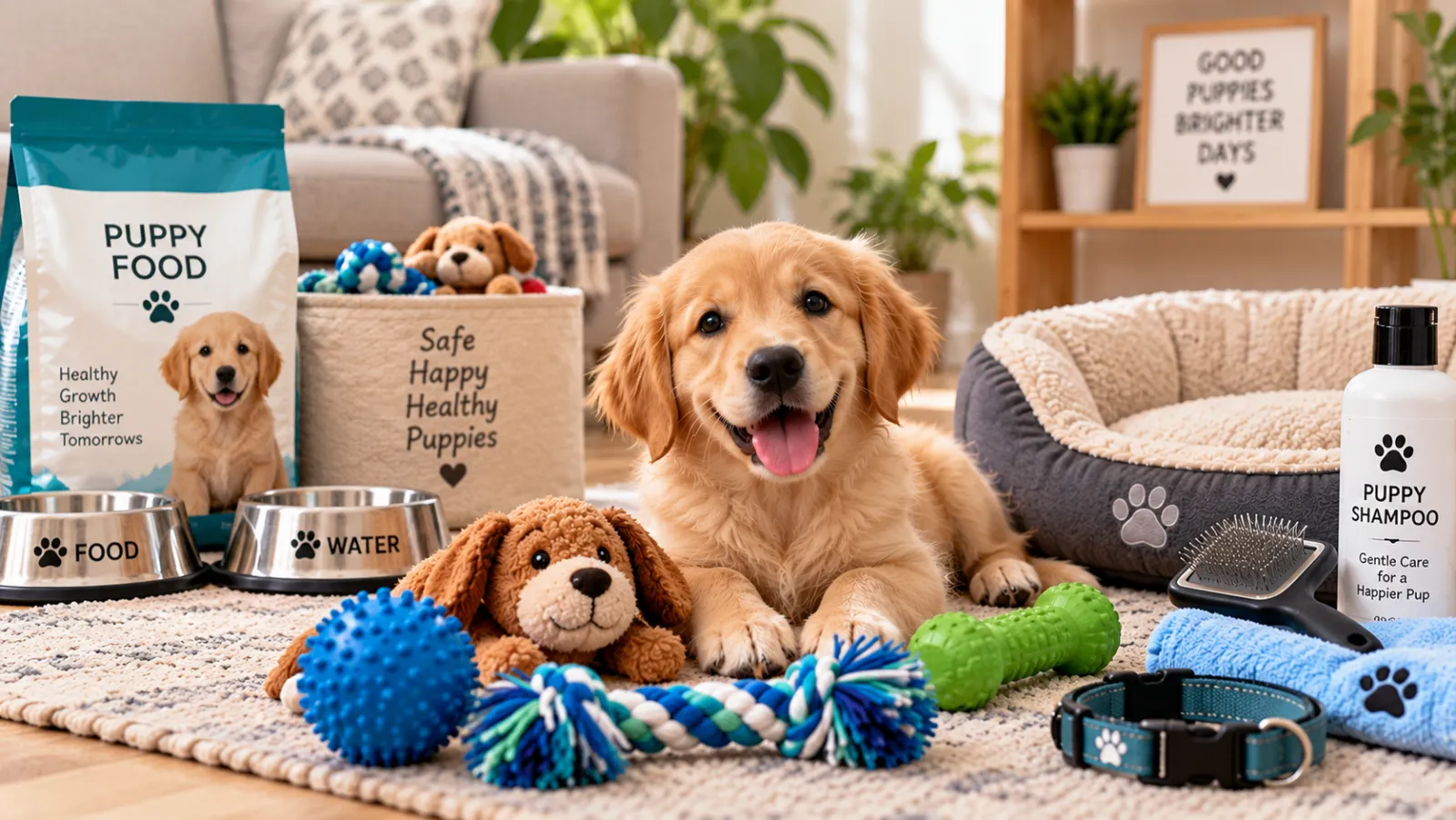
Bringing a dog home is exciting, but preparing for a new pet can quickly become overwhelming. Walk through a pet store or browse an online shop and you may find hundreds of products, from specialized feeding accessories to toys designed for every imaginable type of play.
The good news is that new dog owners do not need to buy everything at once. A practical starter setup can begin with a few essential dog products that support your pet's nutrition, safety, comfort, exercise, and daily routine.
The American Kennel Club recommends preparing basic supplies before bringing a new puppy home, including food, bowls, a collar and leash, toys, a crate, and a dog bed. The ASPCA also includes food and water dishes, safe toys, grooming supplies, identification, a collar, leash, crate, and bedding among basic dog-care supplies.
Why New Dog Owners Should Start With the Essentials
It is easy to spend too much money on products your dog may never use. Instead of buying based on trends or attractive packaging, start by asking what your dog needs every day.
A basic starter kit should help you provide:
Food and fresh water
Safe walking and identification
A comfortable place to sleep
Appropriate play and mental stimulation
Basic grooming and hygiene
Safe management at home and during travel
Our guide to choosing the right dog breed for your lifestyle can also help new owners understand why product needs can vary depending on a dog's size, energy level, grooming requirements, and living environment.
1. Food and Water Bowls
Food and water bowls are among the first products every dog owner should purchase.
Choose bowls that are appropriately sized for your dog and easy to clean. Stainless steel and other durable materials are popular choices because they are generally practical for everyday use.
Your dog should have access to fresh drinking water throughout the day. The feeding routine and type of food should be appropriate for your dog's age, size, activity level, and individual needs.
When choosing food, avoid buying large quantities before you know whether your dog tolerates the product well. If you are bringing home a puppy, ask the breeder, rescue organization, or previous caregiver what food the dog has been eating and make changes gradually when appropriate.
For more guidance on starting a puppy's daily routine, our puppy training guide explains how feeding, bathroom breaks, rest, and training can be incorporated into a consistent schedule.
2. Quality Dog Food
Food should be one of your highest priorities when preparing for a new dog.
Choose a complete and balanced food appropriate for your dog's life stage, unless your veterinarian recommends a specific therapeutic diet. Puppies, adults, and senior dogs can have different nutritional requirements.
The FDA explains that a pet food labeled as complete and balanced is intended to provide the required nutrients for a particular life stage when used according to its labeling. (fda.gov)
For a detailed guide to evaluating food, read our article on how to choose the right dog food for your pet.
Do not forget that treats also contribute to your dog's overall food intake. Use them thoughtfully, particularly during training.
3. Collar or Harness
A collar or harness is essential for safe handling outside the home.
A standard collar can hold identification tags, while a properly fitted harness may be useful for walking and managing some dogs.
The American Kennel Club recommends measuring your dog carefully rather than selecting equipment based only on breed or weight. (akc.org)
The equipment should fit securely without rubbing, restricting movement, or allowing your dog to escape.
Our guide on choosing the right dog collar and harness explains the key differences between collars and harnesses and what to consider when fitting them.
4. Identification Tags
Identification is a small but extremely important part of your dog's starter kit.
An identification tag attached to your dog's collar can provide a way for someone to contact you if your dog becomes lost.
The ASPCA recommends identification through a collar and ID tag and notes that an implanted microchip can provide additional support for reunification if a dog becomes lost. (aspca.org)
Keep your contact information current. If you move or change phone numbers, update the details on your dog's identification and relevant registration records.
5. A Reliable Dog Leash
A good leash is essential for everyday walks.
For many new owners, a sturdy standard leash is a sensible starting point because it provides a balance between control and freedom.
The American Kennel Club commonly recommends a standard leash around 4 to 6 feet for everyday walking and early leash training. (akc.org)
Choose a leash that is strong enough for your dog's size and behavior while remaining comfortable for you to hold.
Our guide to choosing the best dog leash for everyday walks explains how length, strength, handle comfort, material, and environment affect leash selection.
6. A Comfortable Dog Bed
Every new dog needs a comfortable place to rest.
The ideal bed should provide enough room for your dog to lie down and change positions comfortably. Dogs that like to stretch may need more surface area, while dogs that curl up may prefer a different design.
Consider a bed with a removable, washable cover because accidents, fur, dirt, and moisture can make regular cleaning necessary.
The ASPCA includes a dog bed or box with a warm blanket or towel among basic dog supplies and recommends keeping bedding clean. (aspca.org)
For help choosing the right option, read our guide on how to choose the perfect dog bed.
7. Enrichment and Interactive Toys
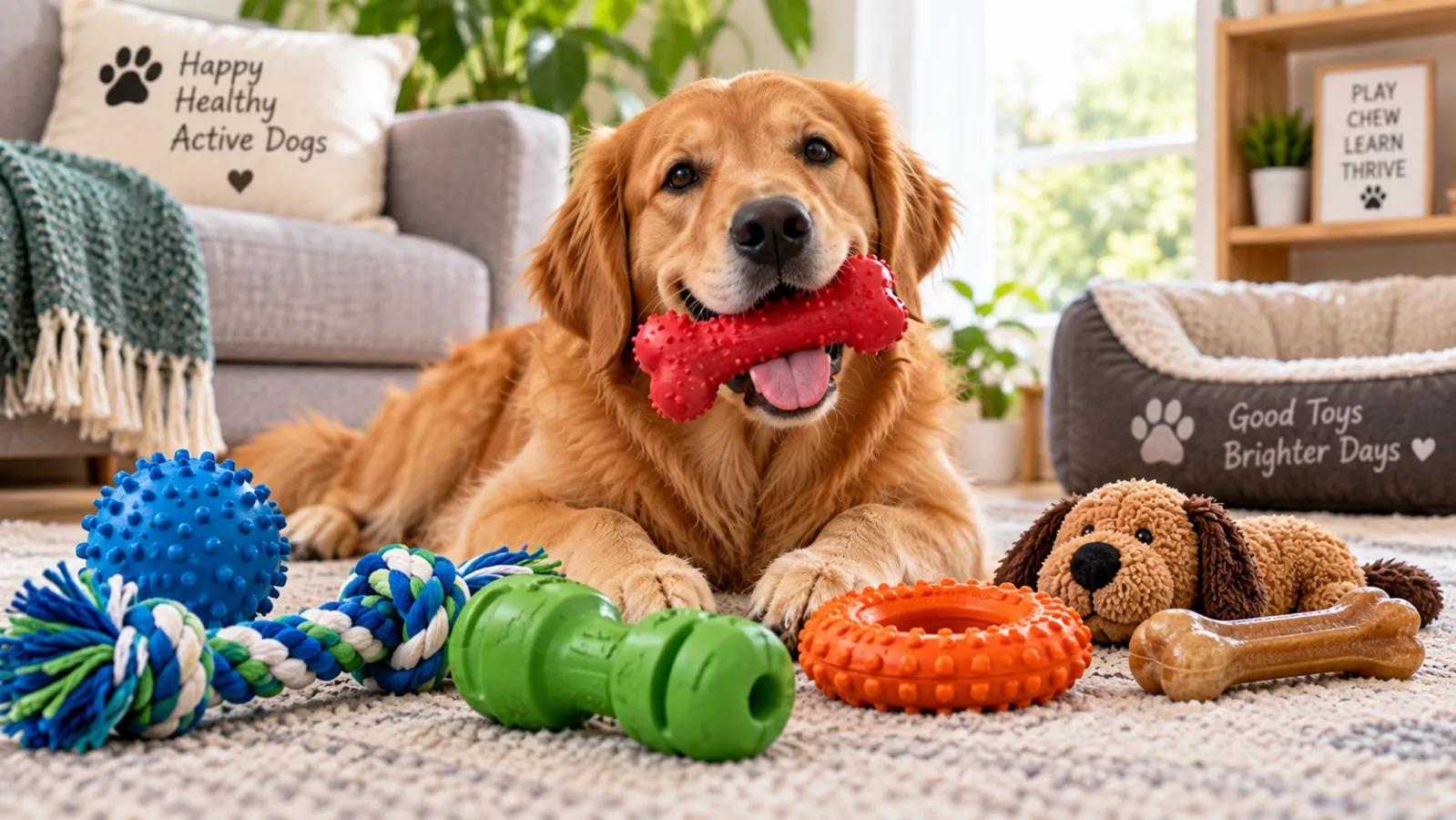
Toys are not simply entertainment. Appropriate toys can provide physical activity, mental stimulation, and an outlet for natural behaviors such as chewing, retrieving, and problem-solving.
A new dog's starter collection can include a few different types:
Chew toys for appropriate chewing
Fetch toys for active play
Puzzle toys for mental enrichment
Interactive toys for play with you
The ASPCA includes safe toys, including chew toys, among essential dog supplies. (aspca.org)
Our guide on the best dog toys for exercise, play, and mental stimulation explains how to choose toys based on your dog's size, age, chewing habits, and activity level.
Always supervise dogs with unfamiliar toys until you understand how they use them, and replace toys that become damaged.
8. A Crate or Safe Resting Space
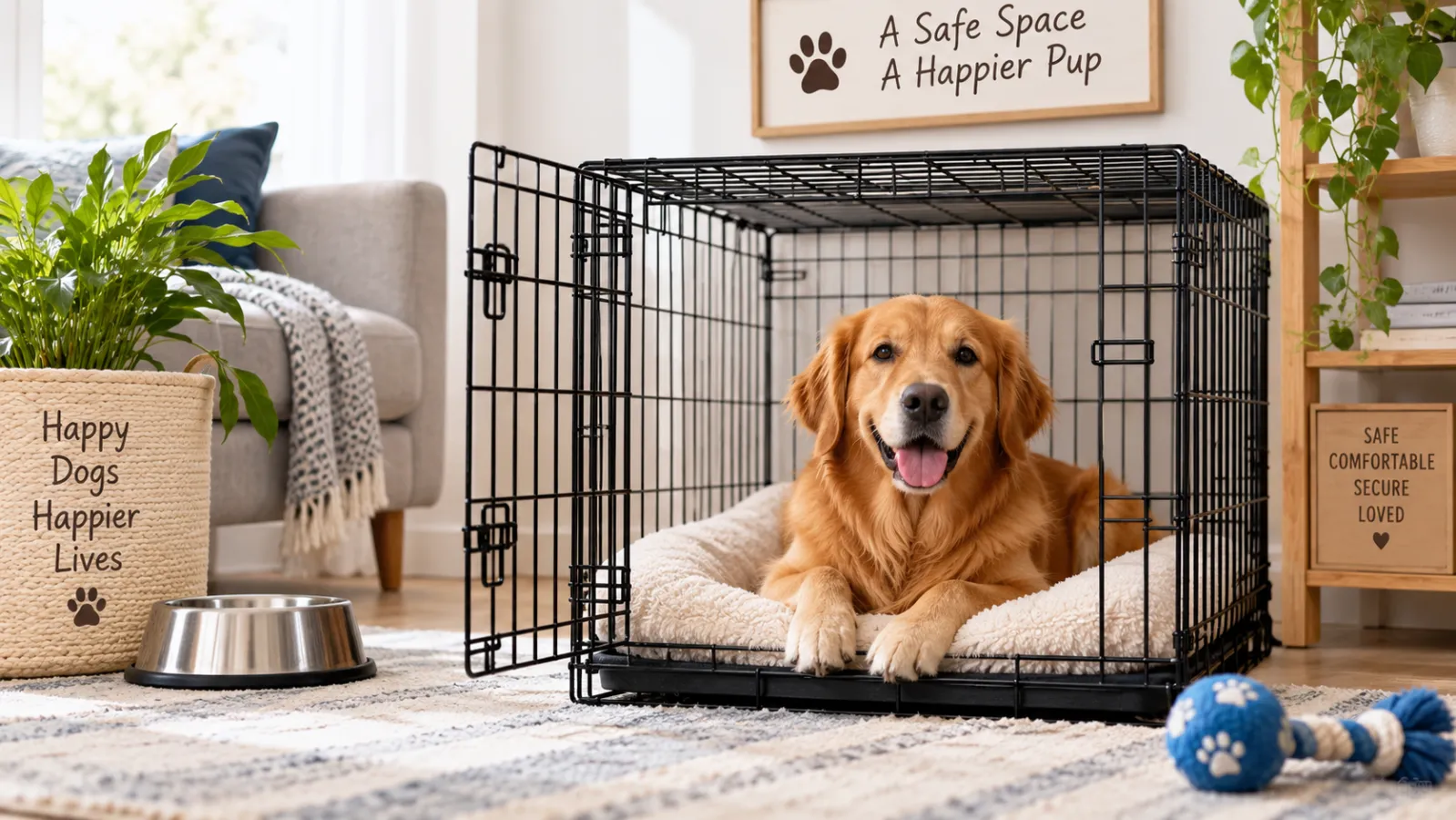
A crate can be a useful management and training tool when introduced positively.
It can provide a designated place for your dog to rest and may be helpful during house training, travel, and situations where you cannot safely supervise your pet.
The American Kennel Club recommends choosing a crate that allows a dog to stand, turn around, and lie down comfortably. (akc.org)
For puppies, an adjustable divider can allow the crate to grow with the dog while maintaining an appropriate amount of space.
Read our guide on how to choose a safe dog crate for more information about size, ventilation, construction, comfort, and cleaning.
A crate should never be used as punishment.
9. Basic Grooming Supplies
New owners should also have a few basic grooming products available.
The exact supplies depend on the dog's coat, but a starter kit may include:
A brush or comb
Dog-specific shampoo
Nail clippers or a nail grinder
A towel
A flea comb when appropriate
The ASPCA includes brushes and combs among its recommended basic dog supplies. (aspca.org)
Different coats require different grooming routines. Our guide to the best dog grooming products for a healthy coat explains how to choose brushes, combs, shampoo, and nail-care tools according to your dog's coat type.
10. Poop Bags and Cleaning Supplies
Waste cleanup supplies are easy to overlook until you need them.
Keep poop bags near your dog's leash or by the door so they are always available before walks.
You may also want washable cleaning supplies for accidents inside the home, particularly when bringing home a puppy.
House training takes patience and consistency. Our guide on house training and potty training provides practical advice for establishing bathroom routines and handling accidents.
11. Training Treats
Small training treats can be useful when teaching basic behaviors.
Choose treats that are appropriate for your dog's size and use small portions during training. You can also use part of your dog's regular food as rewards when appropriate.
Reward-based training can help create positive associations with desired behaviors.
The American Kennel Club recommends preparing training treats as part of a new-puppy supply list. (akc.org)
Our guide to basic obedience commands covers foundational behaviors that can help new owners communicate more clearly with their dogs.
12. Baby Gates or Exercise Pens
A new dog does not necessarily need immediate access to every part of your home.
Baby gates or exercise pens can help create safe boundaries while your dog learns the household routine.
This can be especially helpful for puppies that are still being house trained or dogs that are adjusting to a new environment.
The American Kennel Club recommends gates and exercise pens as useful tools when preparing a home for a new puppy. (akc.org)
Gradually increasing access to the home can help you manage supervision and prevent unwanted habits from developing.
13. Basic Health and Emergency Supplies
You should also keep important health information organized from the beginning.
Have your veterinarian's contact information readily available and maintain records for vaccinations, medications, and other relevant care.
A basic pet first-aid kit may also be useful, although it does not replace veterinary treatment when a dog is injured or ill.
The ASPCA recommends keeping veterinary and identification information available and consulting a veterinarian regarding appropriate preventive care. (aspca.org)
If your dog shows concerning symptoms, do not attempt to diagnose the problem using supplies from a home first-aid kit. Contact a veterinarian.
Our guide to warning signs your dog may be sick can help new owners become more familiar with changes that may require attention.
14. A Carrier or Travel Restraint
Depending on your dog's size and how you travel, you may also need a carrier or appropriate travel restraint.
Small dogs may use carriers for certain types of transportation. Larger dogs may travel in a secured crate or with another restraint system designed for vehicle use.
Prepare travel equipment before the first trip rather than trying to introduce it when you are already in a hurry.
The American Kennel Club recommends considering safe transportation equipment when preparing for a new dog and notes that crates or seat-belt harnesses can be useful for car travel. (akc.org)
15. A Simple Storage and Organization System
A final product that can make ownership easier is not really a pet product at all: a simple way to organize your dog's supplies.
Keep food, treats, grooming equipment, medications, leashes, and cleaning products in predictable places.
Store medicines, chemicals, human foods that are unsafe for dogs, and other hazardous items securely out of your dog's reach. The ASPCA specifically recommends keeping potentially dangerous substances away from pets. (aspca.org)
An organized setup means less time searching for supplies and makes daily care more consistent.
What New Dog Owners Do Not Need to Buy Immediately
Pet stores contain many products that can be useful but are not essential on day one.
You generally do not need to purchase every toy style, multiple beds, large quantities of treats, or specialized accessories before you understand your dog's preferences.
Start with the basics, learn how your dog behaves, and purchase additional products when there is a clear reason to do so.
This approach can save money while helping you choose products based on your dog's actual needs.
A New Dog Owner Shopping Checklist
Before bringing your dog home, make sure you have the basics:
Food appropriate for your dog
Food and water bowls
Collar or harness
Identification tag
Leash
Comfortable bed
Crate or safe resting space
A few safe toys
Basic grooming supplies
Poop bags and cleaning supplies
Training treats
Veterinary information and health records
Appropriate travel equipment
The ASPCA's general dog-care supply checklist includes many of these same essentials, including food, bowls, toys, grooming tools, identification, collar, leash, crate, bedding, and a toothbrush. (aspca.org)
Final Thoughts
Preparing for a new dog does not mean filling your home with every pet product available. Start with the essentials that support the most important parts of daily care: nutrition, hydration, safety, walking, rest, enrichment, grooming, training, and hygiene.
Food and water bowls, a suitable diet, a properly fitted collar or harness, a reliable leash, a comfortable bed, and a few safe toys form the foundation of a practical starter kit.
From there, add products based on your dog's age, size, behavior, coat type, activity level, and lifestyle. A puppy may need gates and a crate, while a highly active adult dog may benefit from additional enrichment and outdoor equipment.
The most important thing is to prepare before your dog arrives, keep the first few days calm and predictable, and give your new companion time to adjust. The American Kennel Club recommends planning ahead and having the necessary supplies ready before bringing a new dog home. (akc.org)
A thoughtful starter kit will not only make life easier for you—it will help your new dog feel safe, comfortable, and ready to become part of the family.
Sources & References
American Kennel Club. New Puppy Checklist: Gear You'll Need for Your New Dog.
https://www.akc.org/expert-advice/puppy-information/new-puppy-checklist/
American Kennel Club. Time to Get a New Puppy? Here's What You Need to Know.
https://www.akc.org/expert-advice/training/preparing-for-a-new-puppy/
American Kennel Club. How to Help an Adult Dog Adjust to a New Home.
https://www.akc.org/expert-advice/home-living/how-to-help-an-adult-dog-adjust-to-a-new-home/
American Kennel Club. 75 Ways to Be a Responsible Dog Owner Throughout Your Pet's Life.
https://www.akc.org/expert-advice/lifestyle/responsible-dog-owner/
ASPCA. General Dog Care.
https://www.aspca.org/pet-care/dog-care/general-dog-care
ASPCA. Finding Your Fido: Tips for Adopting Your New BFF.
https://www.aspca.org/news/finding-your-fido-tips-adopting-your-new-bff
U.S. Food and Drug Administration. “Complete and Balanced” Pet Food.
https://www.fda.gov/animal-veterinary/animal-health-literacy/complete-and-balanced-pet-food
Created with AI • Independently Verified
This article was created with the assistance of artificial intelligence and cross-checked using multiple AI systems to help identify errors, inconsistencies, and missing information.
Important factual claims are additionally checked against reputable veterinary, scientific, animal-welfare, and other authoritative sources before publication.
Our standard: AI helps us research and explain. Reliable evidence determines what we publish.
Last reviewed: September 2026