Bringing a new puppy home is exciting, but choosing products for a young dog requires extra care. Puppies are naturally curious and often explore their surroundings with their mouths. They may chew household objects, investigate unfamiliar materials, and interact with toys, bedding, bowls, collars, and other supplies in ways that adult dogs may not.
That is why puppy products should be selected based on age, size, materials, durability, design, and ease of cleaning rather than appearance alone.
A product that is suitable for an adult dog may be too large, too heavy, too hard, or otherwise inappropriate for a growing puppy. The safest approach is to choose products specifically suited to puppies and supervise their use.
Why Puppy-Safe Products Matter
Puppies are inquisitive and can quickly get into situations that create safety concerns. Veterinary guidance recommends puppy-proofing the home, removing small objects and chewing hazards, securing electrical cords, and keeping medications and cleaning products out of reach. (vcahospitals.com)
Product selection should therefore be considered alongside the puppy's overall environment.
Our guide on puppy training and building good habits from day one explains how early routines, positive reinforcement, and appropriate boundaries can help puppies learn what is safe to explore and what should be avoided.
1. Choose Puppy-Appropriate Sizes
Size is one of the most important considerations when buying products for a puppy.
A toy, collar, harness, crate accessory, or chew product should be appropriate for the puppy's current size. Products that are too small can create swallowing or choking hazards, while oversized products may be difficult or uncomfortable for a young puppy to use.
VCA recommends selecting toys that are appropriately sized and supervising puppies because even recommended toys can become dangerous if pieces are bitten off and swallowed. (vcahospitals.com)
Puppies grow quickly, so check sizing regularly rather than assuming the same product will remain suitable for months.
2. Look for Non-Toxic Materials
Anything a puppy can chew, lick, or potentially swallow deserves careful consideration.
Choose products specifically manufactured for pets and follow the manufacturer's instructions. Avoid giving puppies access to household objects simply because they appear harmless.
The FDA lists numerous household and environmental hazards for pets, including certain medications, cleaning products, pesticides, fertilizers, and some foods. (fda.gov)
The ASPCA also warns that products such as detergents, medications, toothpaste containing xylitol, and other household substances can be dangerous to pets. (aspca.org)
Keeping potentially harmful products locked away is just as important as purchasing safe puppy products.
3. Choose Durable Construction
Puppies can be surprisingly persistent chewers.
Look for products that are constructed securely and do not contain loose pieces that can easily detach. Stitching, seams, fasteners, handles, and other components should be checked regularly.
However, "durable" does not mean "indestructible." A puppy can damage even a product designed for chewing.
VCA recommends supervising puppies with chew toys and removing toys when they begin breaking apart or pieces go missing. (vcahospitals.com)
Durability should therefore always be combined with regular inspection.
4. Be Careful With Hard Chew Products
One of the biggest mistakes puppy owners make is assuming that the hardest chew toy is the safest.
Veterinary guidance warns against extremely hard objects because they can damage developing teeth. VCA specifically advises against hard items such as bones, antlers, and extremely hard nylon products for puppies. (vcahospitals.com)
A suitable puppy chew should provide an appropriate chewing experience without creating unnecessary dental risk.
When choosing a chew product, consider whether it has some flexibility and whether it is specifically designed for puppies.
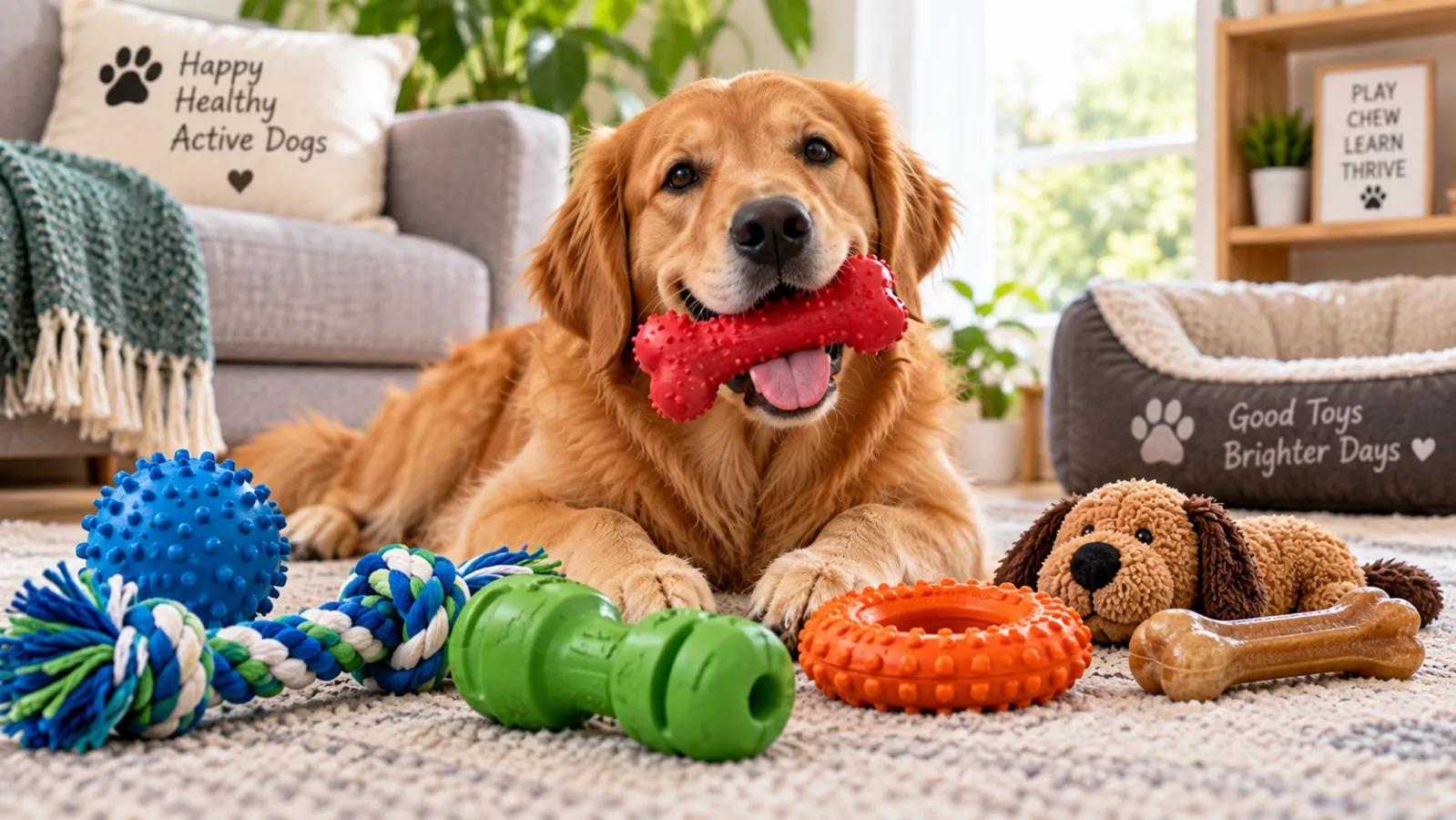
5. Choose Safe Puppy Toys
Puppy toys can provide enrichment, exercise, and an appropriate outlet for chewing.
Good choices can include appropriately sized rubber toys, soft toys designed specifically for puppies, and food-stuffable products made for young dogs.
VCA recommends providing puppies with appropriate chew toys and redirecting them from household objects toward approved alternatives. (vcahospitals.com)
Our guide on choosing durable chew toys for dogs provides additional information about size, materials, durability, supervision, and toy replacement.
6. Avoid Toys With Easily Removable Parts
Puppies may quickly discover that eyes, ribbons, squeakers, tags, stuffing, and other small components can be pulled out.
Any toy with detachable pieces should be used carefully and inspected frequently.
VCA warns that pieces bitten off toys can become choking or gastrointestinal obstruction hazards and recommends removing toys when they begin to break apart. (vcahospitals.com)
Simple toy designs can make it easier to monitor wear.
7. Choose Easy-to-Clean Products
Puppies can create plenty of mess while learning new routines.
Food and water bowls, toys, bedding, crates, and other frequently used products should be easy to clean.
Smooth, washable surfaces can make regular maintenance easier, especially during house training.
Our guide on house training and potty training explains why accidents are a normal part of puppyhood and why consistent cleaning and routines are important.
Choose products that can be cleaned according to the manufacturer's instructions and allow washable items to dry completely before returning them to your puppy.
8. Choose the Right Food and Water Supplies
Food and water products should be appropriate for your puppy's size and feeding routine.
Bowls should be stable enough that the puppy cannot easily tip them over and should be easy to wash.
The food itself should be appropriate for puppy growth and complete and balanced for the relevant life stage when it is intended as the puppy's primary diet.
The FDA explains that a pet food labeled complete and balanced is intended to provide the required nutrients for the stated life stage when used according to the label. (fda.gov)
9. Select Collars and Harnesses Carefully
Puppies need walking equipment that fits correctly without restricting movement.
A collar that is too loose may allow a puppy to escape, while one that is too tight can cause discomfort. Harnesses also need regular adjustment because puppies grow quickly.
The American Kennel Club recommends checking the fit of puppy walking equipment frequently and measuring the dog according to the manufacturer's sizing guidance. (akc.org)
Our guide on choosing the right dog collar and harness explains what to consider when selecting and fitting walking equipment.
10. Choose a Safe Puppy Bed
A puppy bed should be comfortable, appropriately sized, and easy to wash.
Avoid bedding with loose strings, easily detachable decorations, or materials your puppy is likely to chew and swallow.
If your puppy is a strong chewer, choose simple bedding and monitor its condition.
The ASPCA includes bedding among basic supplies for dogs and recommends providing a comfortable place to rest. (aspca.org)
A washable cover can also make life easier during the early stages of house training.
11. Choose a Properly Sized Crate
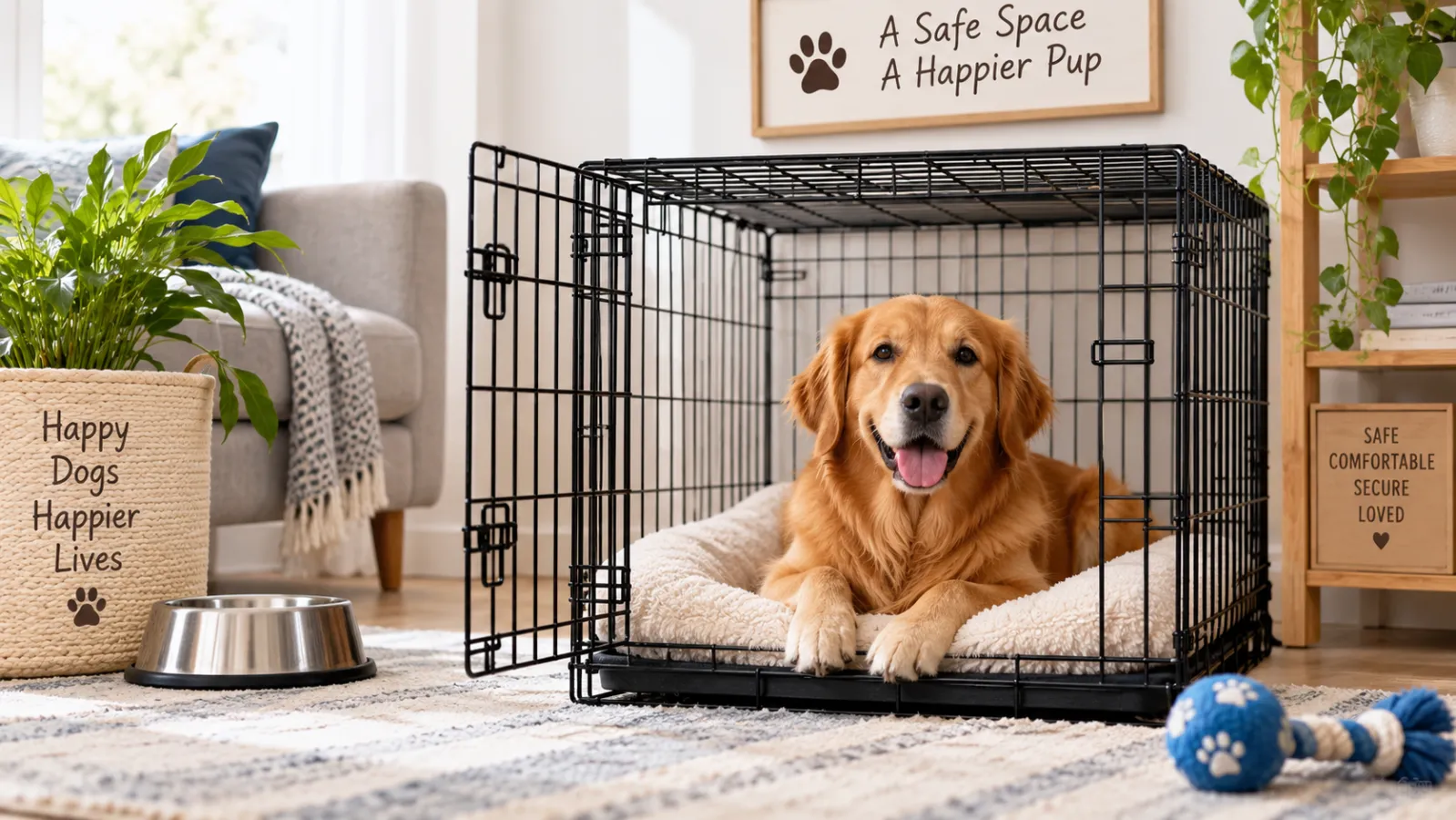
If you use a crate, it should give your puppy enough room to stand, turn around, and lie down comfortably.
An adjustable divider can be helpful because puppies grow rapidly. The available space can be increased as your puppy becomes larger.
The American Kennel Club recommends choosing a crate based on the dog's size and ensuring the puppy can stand, turn, and lie down comfortably. (akc.org)
Our guide on how to choose a safe dog crate covers crate size, ventilation, construction, cleaning, and appropriate use.
12. Puppy-Proof the Home
Safe products cannot compensate for an unsafe environment.
Puppies may chew electrical cords, investigate trash, swallow small objects, or reach household chemicals.
VCA recommends securing electrical cords, keeping medications and cleaning supplies out of reach, securing trash cans, and checking that doors, windows, fences, and plants are safe for puppies. (vcahospitals.com)
The American Kennel Club similarly recommends removing small choking hazards and keeping dangerous household products securely stored. (akc.org)
Think of puppy-proofing as an extension of choosing safe products.
13. Keep Small Objects Out of Reach
Puppies frequently investigate objects with their mouths.
Coins, rubber bands, small children's toys, batteries, jewelry, pieces of plastic, and other small objects can be dangerous if swallowed.
The FDA identifies swallowed non-food items as potential risks for choking and gastrointestinal obstruction. (fda.gov)
Before allowing a puppy to explore a room, get down to its level and look for objects it could reach.
This simple habit can reveal hazards that are easy to miss from an adult's standing height.
14. Store Cleaning Products and Medicines Securely
Household cleaners, detergents, medications, and some personal-care products can be dangerous to puppies.
The ASPCA advises keeping potentially hazardous household products away from pets and recommends contacting a veterinarian or poison-control service immediately when a potentially toxic exposure occurs. (aspca.org)
Use closed cabinets, secure storage containers, or other barriers that a curious puppy cannot open.
Do not assume that child-resistant packaging will necessarily prevent a determined puppy from reaching something dangerous.
15. Choose Grooming Products Designed for Puppies
Puppies may need brushes, combs, nail-care tools, shampoo, and other basic grooming supplies.
Choose equipment appropriate for a young dog's size and coat type. Grooming should be introduced gradually so that the puppy learns to tolerate handling.
Our guide on choosing the best dog grooming products for a healthy coat explains how coat type influences brush, comb, shampoo, and nail-care choices.
For shampoo, use a product specifically formulated for dogs and follow the manufacturer's directions.
16. Introduce Products Gradually
A safe product can still be frightening if a puppy is suddenly exposed to it.
This applies to:
Harnesses
Collars
Brushes
Nail grinders
Crates
New toys
Allow the puppy to inspect unfamiliar objects before expecting it to wear or use them.
Reward calm investigation with praise, treats, or play. Short sessions can help prevent unnecessary stress.
Our guide on easy puppy training tips that actually work provides additional ideas for using positive reinforcement during early learning.
17. Supervise New Products
When introducing a new product, watch how your puppy interacts with it.
A product might be marketed as puppy-safe but still become unsuitable if your particular puppy damages it quickly.
Supervision is especially important for chew toys, rope toys, bedding, and products with multiple components.
VCA emphasizes that no toy is completely risk-free and recommends supervising puppies even when they are using recommended toys. (vcahospitals.com)
Your puppy's actual behavior should determine whether a product remains in use.
18. Inspect Products Regularly
Make product inspection part of your puppy-care routine.
Look for:
Cracks
Loose pieces
Frayed fabric
Broken seams
Sharp edges
Damaged clips
Missing components
Remove damaged products immediately.
Do not wait until your puppy has completely destroyed something before replacing it.
19. Avoid Buying Too Much Too Soon
New puppy owners sometimes purchase large collections of toys, accessories, and supplies before understanding what their puppy actually likes.
Start with the essentials.
A few appropriate toys are usually more useful than a large pile of products that are never used. You can then add items according to your puppy's behavior, size, coat, and developmental stage.
This approach also makes it easier to monitor which products your puppy handles safely.
Common Mistakes to Avoid
One common mistake is choosing products based on appearance rather than function. A cute toy or bed may not be appropriate for an active puppy that chews everything.
Another mistake is purchasing products that are too small because the puppy is still tiny. Puppies grow quickly, and products need to be reassessed regularly.
Using very hard chew items is another concern because hard materials can damage puppy teeth. (vcahospitals.com)
Owners should also avoid leaving medications, cleaning products, small household objects, and electrical cords where a curious puppy can access them. (vcahospitals.com)
A Simple Puppy Product Safety Checklist
Before buying or using a product, ask:
Is it appropriate for my puppy's current size?
Is it designed for puppies or young dogs when appropriate?
Are the materials suitable for pet use?
Could my puppy easily break off or swallow a piece?
Is it durable enough for my puppy's chewing habits?
Can it be cleaned properly?
Does it allow normal movement and comfort?
Can I supervise my puppy while using it?
If the answer to any safety question is uncertain, choose another product or ask your veterinarian for guidance.
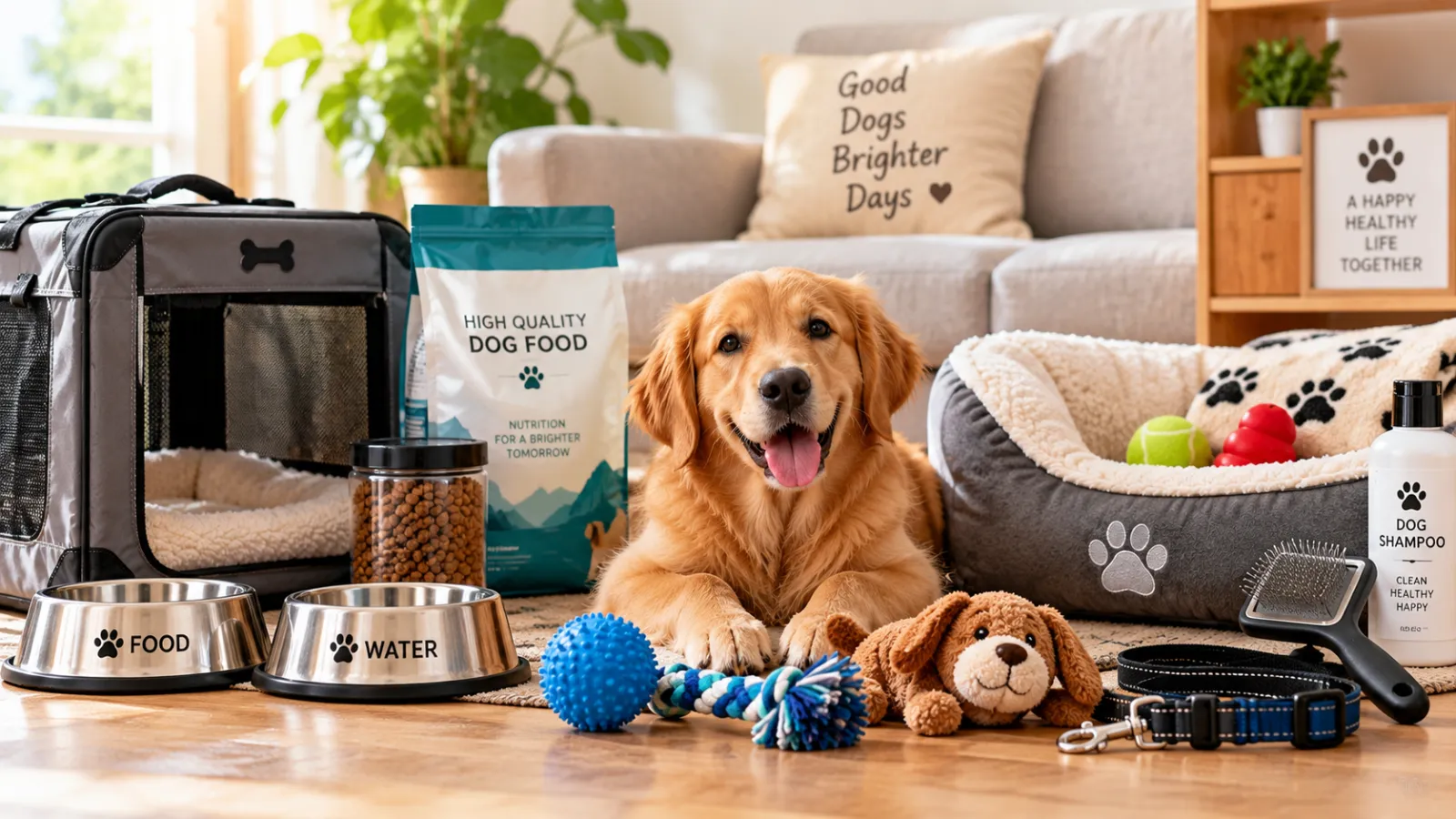
What Products Should You Have for a New Puppy?
A practical puppy starter kit can include:
Food and water bowls
Puppy-appropriate food
Properly fitted collar or harness
Reliable leash
Identification
Comfortable washable bedding
Appropriately sized crate
Safe chew and enrichment toys
Brush or comb
Puppy-safe shampoo
Nail-care supplies
Poop bags and cleaning products
Training treats
Puppy-proofing equipment such as gates
You do not need to purchase the most expensive option in every category. Focus on products that are safe, functional, appropriately sized, and suited to your puppy's individual needs.
Final Thoughts
Choosing safe products for puppies requires more attention than simply checking whether an item is labeled for dogs. Puppies are curious, fast-growing, and naturally inclined to investigate their surroundings with their mouths.
Prioritize puppy-appropriate sizes, suitable materials, durable construction, easy-to-clean surfaces, and regular supervision.
Check products frequently as your puppy grows and replace anything that becomes damaged or too small. At the same time, keep potentially dangerous household items securely out of reach.
Most importantly, remember that product safety and environmental safety work together. A puppy needs suitable toys and supplies, but it also needs a puppy-proofed home, appropriate supervision, positive training, and a consistent routine.
With thoughtful product choices and careful supervision, you can create a safer environment where your puppy can explore, learn, play, and grow.
Sources & References
VCA Animal Hospitals. Puppy-Proofing 101: How to Puppy-Proof Your House.
https://vcahospitals.com/pediatric/puppy/prep-supplies/how-to-puppy-proof-your-house
VCA Animal Hospitals. Dos and Don'ts of Puppy Teething Toys.
https://vcahospitals.com/pediatric/puppy/prep-supplies/puppy-teething-toys
VCA Animal Hospitals. Teeth, Teething and Chewing in Puppies.
https://vcahospitals.com/know-your-pet/teeth-teething-and-chewing-in-puppies
FDA. Potentially Dangerous Items for Your Pet.
https://www.fda.gov/animal-veterinary/animal-health-literacy/potentially-dangerous-items-your-pet
ASPCA. Poisonous Household Products.
https://www.aspca.org/pet-care/aspca-poison-control/poisonous-household-products
American Kennel Club. Puppy-Proofing Tips for Your Home and Yard.
https://www.akc.org/expert-advice/home-living/puppy-proofing-tips-for-your-home-and-yard/
American Kennel Club. New Puppy Checklist: Gear You'll Need for Your New Dog.
https://www.akc.org/expert-advice/puppy-information/new-puppy-checklist/
Created with AI • Independently Verified
This article was created with the assistance of artificial intelligence and cross-checked using multiple AI systems to help identify errors, inconsistencies, and missing information.
Important factual claims are additionally checked against reputable veterinary, scientific, animal-welfare, and other authoritative sources before publication.
Our standard: AI helps us research and explain. Reliable evidence determines what we publish.
Last reviewed: September 2026