Choosing whether your cat should live exclusively indoors or have access to the outdoors is one of the biggest decisions a new cat owner can make. For many first-time owners, the question seems simple: cats love exploring, so shouldn’t they be allowed outside? But modern neighborhoods, busy roads, predators, diseases, parasites, and other environmental hazards make the decision much more complicated.
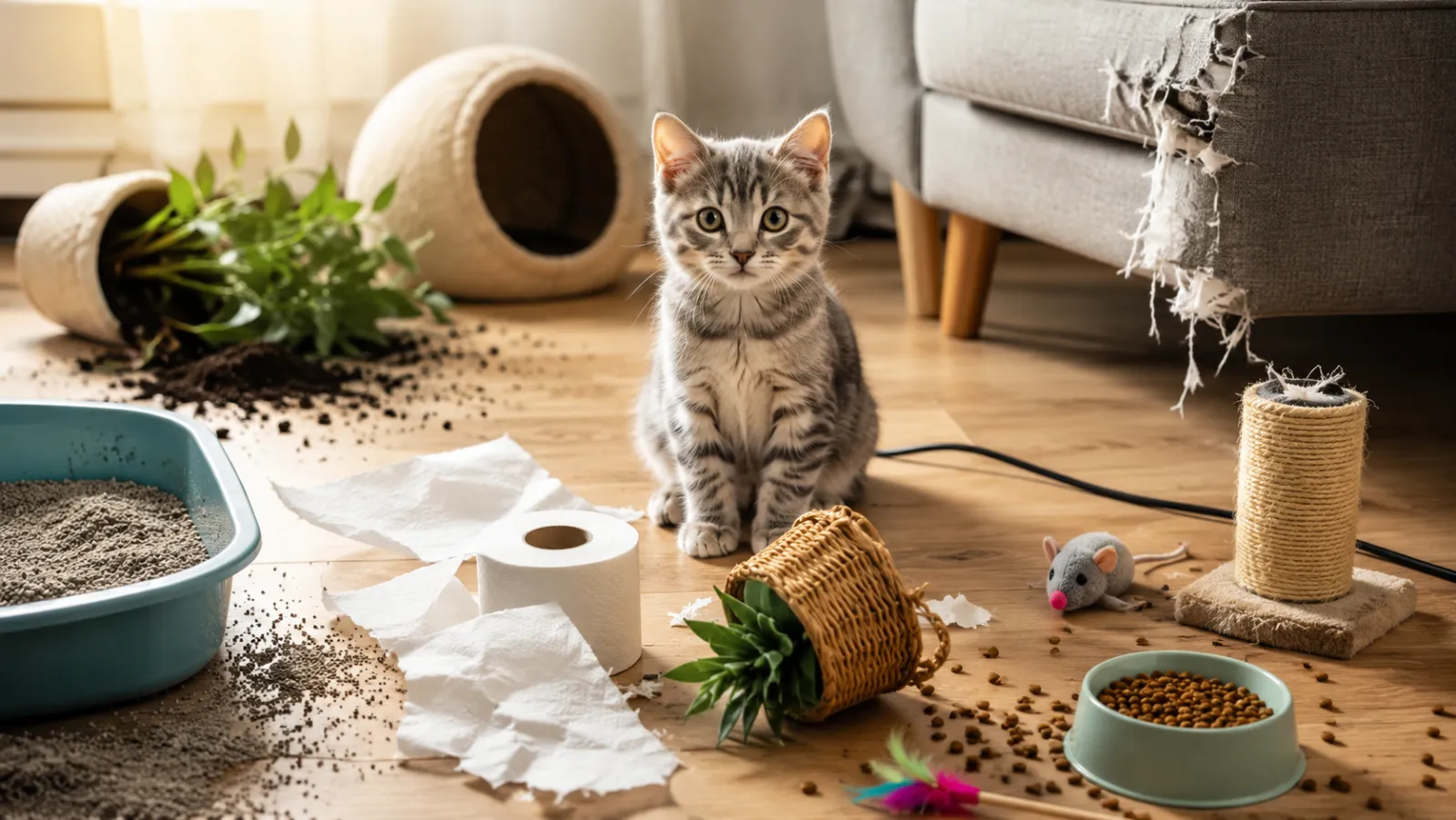
At the same time, keeping a cat indoors does not automatically guarantee a happy and healthy life. Cats are naturally curious, active animals that need opportunities to climb, scratch, hunt, explore, play, and observe their surroundings. Without enough stimulation, an indoor cat may become bored, inactive, anxious, or develop unwanted behaviors.
So, which is best—indoor or outdoor?
For most companion cats in North America, an indoor lifestyle with plenty of enrichment is generally the safer choice. However, supervised outdoor experiences through harness training, catios, or secure outdoor enclosures can provide many of the benefits of being outside while reducing major risks. The right decision ultimately depends on your cat’s personality, health, environment, and ability to meet its physical and mental needs.
1. Understand the Indoor Cat Lifestyle
An indoor cat spends most or all of its life inside the home. This lifestyle can work extremely well when the environment is designed around the cat’s natural behaviors.
Indoor living protects cats from many outdoor hazards, including traffic, fights with other animals, exposure to toxins, and certain infectious diseases. Veterinary organizations also emphasize that indoor-only cats still need their environmental needs met through play, hunting-style activities, vertical space, resting areas, scratching opportunities, and appropriate litter facilities.
Why Indoor Living Can Be Beneficial
An indoor lifestyle can provide:
- A controlled and predictable environment
- Protection from vehicles
- Lower exposure to outdoor predators
- Reduced opportunities for fights with other cats
- Less exposure to certain infectious diseases
- Reduced exposure to fleas, ticks, and other parasites
- Protection from many outdoor toxins
- A more controlled diet and feeding routine
- Easier monitoring of changes in health or behavior
However, simply keeping a cat inside is not enough.
A cat sitting alone in a small room all day without play, climbing opportunities, or interaction may not receive the enrichment it needs. The American Association of Feline Practitioners emphasizes that indoor cats require an environment that supports normal feline behaviors.
In other words, indoor living should be active living—not boring living.
2. Health Benefits of Keeping Cats Indoors
One of the strongest arguments for indoor cats is reduced exposure to dangerous situations.
Outdoor cats can encounter vehicles, unfamiliar animals, contaminated environments, toxic substances, and parasites. They may also be injured during territorial conflicts with other cats.
Cats that roam outdoors can encounter diseases transmitted through bites, saliva, close contact, contaminated environments, fleas, ticks, and other vectors. Even vaccinated cats are not completely protected from every possible outdoor hazard.
Indoor living also makes it easier for owners to notice health changes.
For example, if your cat suddenly:
- Stops eating
- Drinks significantly more water
- Uses the litter box differently
- Becomes less active
- Loses weight
- Hides more frequently
- Develops a wound
you are more likely to notice the change quickly when your cat spends most of its time inside.
That does not mean indoor cats never get sick. Indoor cats still require appropriate veterinary care, vaccinations, parasite prevention when recommended, and routine health monitoring.
Indoor cats can also be exposed to some diseases and parasites. Certain pathogens can enter homes through shoes, clothing, other animals, or environmental exposure. Therefore, “indoor” does not mean “no veterinary care needed.”
3. Safety Concerns for Outdoor Cats
Outdoor exploration may look harmless, but the outside world contains risks that are difficult for owners to control.
One of the biggest dangers is traffic.
Even a cat that normally stays close to home can suddenly run across a road after being frightened, chasing another animal, or following an interesting scent.
Other outdoor hazards include:
- Cars and trucks
- Dogs and other predators
- Territorial fights with other cats
- Toxic chemicals and pesticides
- Rodenticides and poisoned prey
- Fleas, ticks, and other parasites
- Infectious diseases
- Extreme heat or cold
- Getting trapped in sheds, garages, or other structures
- Becoming lost
- Human-related hazards
- Wildlife encounters
North American environments can vary dramatically. A cat living in a suburban neighborhood may face traffic and dogs, while a rural cat may encounter coyotes, larger predators, farm equipment, poisonous substances, or other hazards.
A fenced yard also does not necessarily make a cat safe. Cats are excellent climbers and can often escape ordinary fences.
This is why controlled outdoor access is increasingly considered a safer alternative to unrestricted roaming.
4. Indoor vs Outdoor Cats and Lifespan
Lifespan is another important consideration.
There is no single number that applies to every cat because genetics, nutrition, veterinary care, disease, accidents, and lifestyle all influence longevity. However, indoor living generally reduces exposure to many causes of premature injury and death.
Outdoor cats face risks that simply do not exist to the same degree indoors. A cat cannot be hit by a car while relaxing on an indoor cat tree, for example.
This does not mean an outdoor cat will necessarily have a short life. Many outdoor and indoor-outdoor cats live for years. However, unrestricted outdoor access increases exposure to hazards that owners cannot completely control.
For first-time cat owners, this is an important distinction:
Outdoor access can provide enrichment, but unrestricted roaming comes with additional risk.
If your goal is to maximize safety while still giving your cat opportunities to experience the outdoors, controlled outdoor access can offer a useful middle ground.
5. Exercise Needs: Do Indoor Cats Get Enough?
One common misconception is that outdoor cats automatically get more exercise while indoor cats become unhealthy.
The reality is more complicated.
Outdoor environments provide opportunities for walking, climbing, chasing, jumping, and exploring. But an indoor cat can also receive plenty of physical activity when its owner creates an engaging environment.
Try incorporating:
- Interactive wand toys
- Chase games
- Cat trees
- Scratching posts
- Climbing shelves
- Puzzle feeders
- Treat-dispensing toys
- Short play sessions throughout the day
- Toys that encourage stalking and pouncing
Instead of leaving ten toys on the floor permanently, rotate them.
A toy that disappears for a week can become interesting again when it returns.
Daily interactive play is particularly valuable because it allows cats to express natural behaviors such as stalking, chasing, pouncing, and capturing.
For cats that are overweight or relatively inactive, enrichment should be combined with an appropriate feeding plan and veterinary guidance.
6. Mental Stimulation Is Just as Important
Exercise is only one part of the equation.
Cats also need mental stimulation.
In the wild, cats spend significant amounts of time monitoring their environment, searching for food, investigating scents, and responding to movement. Your house may provide food easily, but you can recreate some of these challenges safely.
Window perches are an excellent example.
A comfortable perch near a secure window gives your cat an elevated place to observe:
- Birds
- Squirrels
- People
- Vehicles
- Weather
- Other animals
You can also use puzzle feeders that require your cat to work for part of its food.
Rotate enrichment regularly so the environment does not become predictable.
Another useful strategy is to create vertical territory. Cat trees, shelves, and secure climbing structures allow cats to move upward and observe their surroundings from a safe location.
For many indoor cats, vertical space can be just as valuable as additional floor space.
7. What About the Benefits of Going Outdoors?
It is important not to pretend that outdoor access has no advantages.
The outdoors can provide a much more complex sensory environment.
Your cat can experience:
- New smells
- Different textures
- Fresh air
- Natural sounds
- Sunlight
- Movement
- New sights
- Opportunities to explore
These experiences can provide meaningful enrichment.
The problem is not necessarily the outdoors itself.
The problem is uncontrolled outdoor access.
Instead of allowing your cat to roam freely, consider ways to provide outdoor experiences while maintaining control over the environment.
8. Supervised Outdoor Adventures
One of the easiest alternatives to free roaming is supervised outdoor time.
You can take your cat outside using a properly fitted harness and leash.
However, cats are not small dogs.
Many cats dislike having equipment placed on them initially, so harness training should be gradual.
Start indoors.
Allow your cat to investigate the harness without immediately putting it on. Reward calm behavior. Once your cat becomes comfortable, introduce the harness for short periods inside the house.
After your cat is comfortable walking indoors with the harness, you can gradually introduce a quiet outdoor environment.
Never force a frightened cat to continue an outdoor adventure.
Signs that your cat is overwhelmed can include:
- Flattened ears
- Crouching
- Attempting to escape
- Excessive vocalization
- Tail tucked tightly against the body
- Rapid breathing
- Hiding
The goal is not to make your cat “brave” by forcing exposure. The goal is to create a positive and controlled experience.
9. Catios: A Safer Way to Enjoy the Outdoors
A catio is an enclosed outdoor space designed specifically for cats.
Catios have become increasingly popular because they allow cats to experience outdoor sights, sounds, smells, and fresh air while limiting access to many hazards associated with free roaming.
A catio can be:
- Attached to a window
- Connected to a door
- Built onto a porch
- Constructed as a standalone enclosure
- Small and simple
- Large enough for climbing and exploring
A good catio should be secure, escape-resistant, weather-appropriate, and designed with your cat’s comfort in mind.
Consider adding:
- Platforms
- Shelves
- Scratching surfaces
- Comfortable resting areas
- Shade
- Safe climbing structures
- Water
- Hiding spaces
Remember that a catio does not eliminate every possible risk. Cats may still be exposed to insects, parasites, weather, or contact with other animals depending on the design and location.
For that reason, discuss outdoor access with your veterinarian and keep your cat's preventive healthcare appropriate for its lifestyle.
10. Outdoor Enclosures Beyond a Catio
A full catio is not the only option.
Portable outdoor enclosures can provide temporary access to a protected area. These can be useful for apartment balconies, patios, yards, or travel situations when properly secured and supervised.
If you live in an apartment, even a secure window enclosure or screened outdoor area can provide additional sensory enrichment.
Safety should always come first.
Never assume a cat will remain inside an enclosure simply because it appears secure. Cats can squeeze through surprisingly small openings and can climb or jump higher than many owners expect.
Inspect outdoor enclosures regularly for:
- Loose panels
- Damaged mesh
- Gaps
- Weak doors
- Sharp edges
- Escape routes
11. Can Outdoor Cats Still Be Healthy?
Yes.
An outdoor or indoor-outdoor cat can receive excellent care, but outdoor access requires more attention to preventive healthcare and risk management.
Depending on the cat's lifestyle and region, discuss with your veterinarian:
- Vaccinations
- Parasite prevention
- Rabies protection
- Identification
- Microchipping
- Spaying or neutering
- Feline leukemia virus risk
- Routine wellness examinations
A visible identification tag and microchip can also improve the chances of being reunited with a cat that becomes lost.
Importantly, indoor cats should not automatically be considered exempt from preventive care. Cats can escape, and some infectious diseases and parasites can enter the home.
12. How to Choose the Right Lifestyle for Your Cat
There is no universal answer that applies to every cat.
Consider your cat's:
Age: Kittens may require especially careful supervision and should not simply be released outdoors.
Health: Cats with certain medical conditions may benefit from a controlled environment.
Personality: Some cats are confident explorers, while others become extremely stressed outside.
Previous lifestyle: A cat accustomed to outdoor life may have different behavioral needs from a kitten raised indoors.
Location: A home near busy roads has different risks from a quiet rural property.
Predators: Wildlife risks vary considerably across North America.
Home environment: A stimulating indoor home can make indoor living much easier.
Your ability to supervise: Controlled outdoor access requires time and consistency.
The American Association of Feline Practitioners notes that cats have individual needs and that controlled outdoor access—such as enclosures or harness and leash walking—can provide stimulation while minimizing many outdoor risks.
13. Creating the Best Indoor Environment
If you decide to keep your cat indoors, focus on making the home interesting.
A good indoor environment might include:
- A comfortable cat tree
- Multiple scratching surfaces
- Window perches
- Interactive toys
- Puzzle feeders
- Safe hiding places
- Vertical climbing areas
- Regular play sessions
- Clean litter boxes
- Comfortable resting spaces
You can also create a daily routine.
For example:
Morning: Short interactive play session
Afternoon: Puzzle feeder or food-search activity
Evening: Longer play session followed by a meal
Night: Quiet resting and bonding time
The exact routine does not matter as much as consistency and variety.
Common Mistakes Cat Owners Make
Even well-intentioned owners can accidentally create problems.
1. Assuming indoor means no stimulation is necessary
Cats still need exercise, play, exploration, and mental challenges indoors.
2. Allowing unrestricted outdoor access because the cat seems bored
Boredom should first be addressed through enrichment and environmental improvements.
3. Taking an untrained cat outside on a leash
Harness training should happen gradually and positively.
4. Assuming a fenced yard is cat-proof
Most cats can climb or jump over standard fences.
5. Ignoring identification
Microchipping and visible identification can be valuable even for indoor cats because escapes can happen unexpectedly.
6. Forgetting veterinary care
Lifestyle changes can affect vaccination and parasite-prevention needs. Your veterinarian can help create a plan based on your cat's actual exposure risk.
Final Thoughts
So, indoor vs outdoor cats: which is best?
For most companion cats in North America, an indoor lifestyle is the safer starting point because it reduces exposure to traffic, predators, fights, toxins, infectious diseases, and other outdoor hazards.
But indoor living should never mean a boring life.
A healthy indoor cat needs opportunities to climb, scratch, hunt, play, explore, observe, and rest. Window perches, cat trees, interactive toys, puzzle feeders, and regular play can transform an ordinary home into a stimulating feline environment.
If you want your cat to experience the outdoors, you do not necessarily have to choose between complete confinement and unrestricted roaming. Harness training, supervised adventures, secure outdoor enclosures, and catios can provide fresh air and sensory stimulation while reducing many of the dangers associated with free-roaming.
Ultimately, the best lifestyle is the one that balances safety, physical health, mental stimulation, and your individual cat's needs.
Your cat does not need to roam the neighborhood to have an enriching life. With thoughtful planning, an indoor cat can live an active, stimulating, comfortable life—and with controlled outdoor access, many cats can safely enjoy some of the experiences that make the outside world so interesting.
When in doubt, talk with your veterinarian about your cat's age, health, behavior, location, and lifestyle before making a major change. The goal is not simply to decide whether your cat belongs indoors or outdoors. The goal is to create a lifestyle where your cat can remain safe, stimulated, healthy, and happy for years to come.