Setting up your first aquarium can be exciting, but it can also be overwhelming. Walk into an aquarium store or browse online and you'll find hundreds of products claiming to make fishkeeping easier, healthier, or more enjoyable.
The good news is that you don't need every aquarium accessory available to get started.
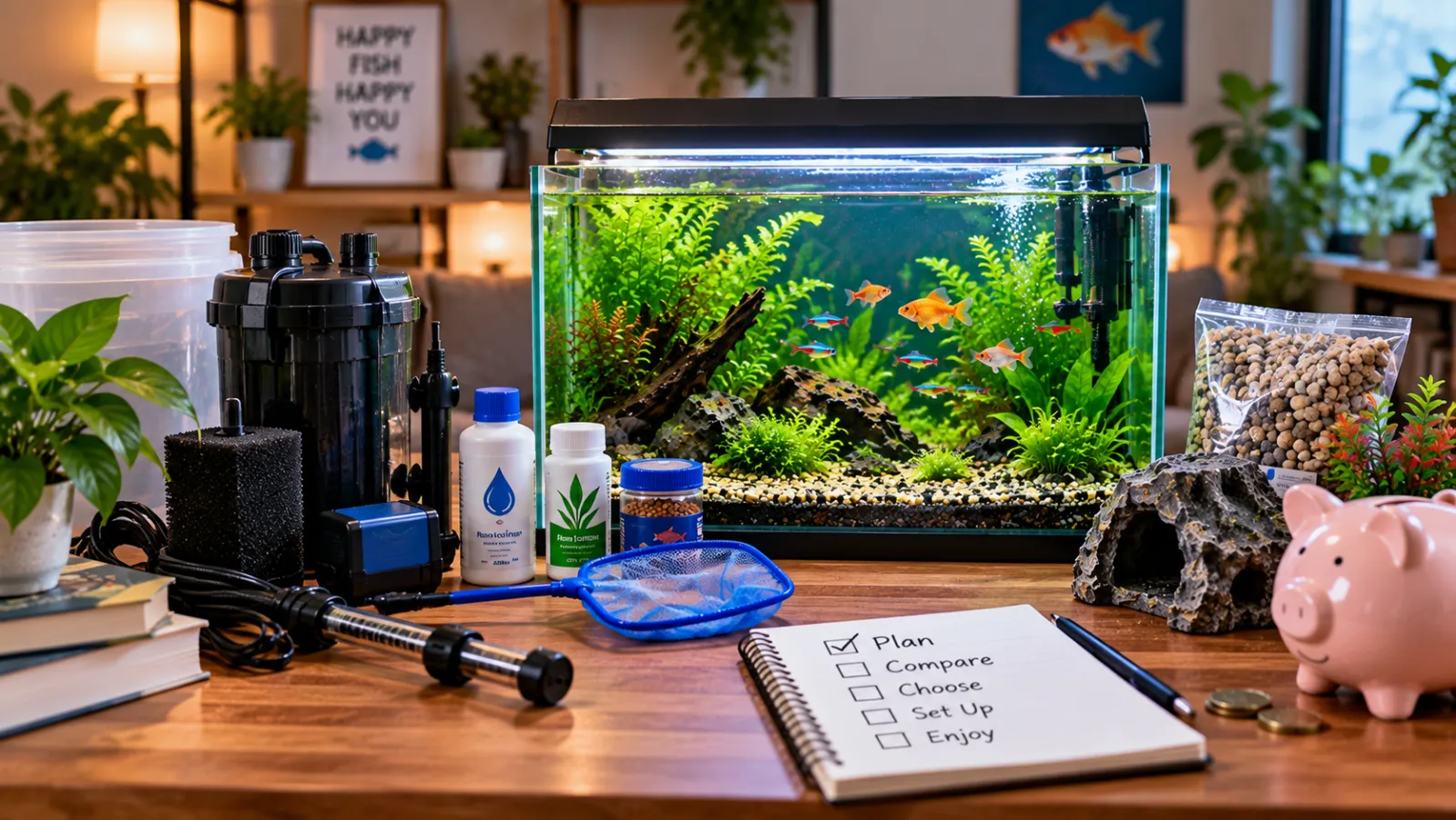
A beginner aquarium can be built around a few essential pieces of equipment: a suitable aquarium and stand, filter, heater when appropriate, and water-testing equipment. Once these basics are in place, you can add other equipment according to the needs of your fish, plants, and aquarium setup.
Choosing equipment based on the animals you're keeping is more important than buying the most expensive products.
What Equipment Does a Beginner Aquarium Actually Need?
A basic aquarium setup generally starts with:
- Aquarium
- Suitable stand or stable support
- Filter
- Heater when required
- Thermometer
- Water-testing equipment
- Appropriate lighting
- Water conditioner
- Substrate and decorations when appropriate
- Fish net and basic maintenance equipment
Not every aquarium requires exactly the same equipment.
For example, a tropical freshwater aquarium will normally have different heating requirements from an aquarium housing species that can live comfortably at the surrounding room temperature.
Before purchasing equipment, it's important to understand the needs of your chosen fish. YourPetsWorld's guide on how to choose the right aquarium for your fish is a useful starting point.
1. Aquarium and Stand
The aquarium itself is the foundation of your setup.
When choosing a tank, consider:
- Available space
- Aquarium volume
- Fish species
- Adult fish size
- Number of fish
- Maintenance access
- Location
- Weight when filled
Don't choose a tank simply because it looks attractive.
The aquarium needs to provide an appropriate environment for the fish you intend to keep.
Why Aquarium Size Matters
A larger aquarium isn't necessarily more difficult for beginners.
In many situations, a larger volume of water can provide greater stability because changes in water conditions may occur more gradually than in a very small aquarium.
However, a larger tank also requires:
- More water
- More substrate
- A stronger support structure
- More equipment
- More maintenance time
The important thing is to choose an aquarium appropriate for your livestock and available space.
Choosing the Right Aquarium Stand
Never underestimate the importance of a suitable stand.
A filled aquarium can be extremely heavy because the total weight includes:
- Water
- Glass or acrylic
- Substrate
- Rocks
- Driftwood
- Decorations
- Equipment
The stand should therefore be designed to support the aquarium safely and evenly.
Avoid placing a large aquarium on furniture that wasn't designed to carry its weight.
Look for:
- Appropriate weight capacity
- Stable construction
- Level support
- Correct aquarium dimensions
- Moisture-resistant materials
- Adequate equipment storage
A stable foundation is just as important as the equipment inside the aquarium.
2. Aquarium Filter
A filter is one of the most important pieces of aquarium equipment.
It helps manage waste, provides mechanical filtration, supports biological filtration, and circulates aquarium water.
There are several common filter types:
- Sponge filters
- Internal filters
- Hang-on-back filters
- Canister filters
- Sump systems
The best choice depends on your aquarium's size, stocking level, fish species and desired water movement.
For a deeper explanation of filtration, see our guide to the best aquarium filters and how to choose the right one.
What Does a Filter Do?
Aquarium filters can provide several forms of filtration.
Mechanical Filtration
Traps physical particles such as waste and uneaten food.
Biological Filtration
Provides surfaces where beneficial microorganisms can establish and help process nitrogenous waste.
Chemical Filtration
Uses specialized media to target certain dissolved substances when appropriate.
A beginner doesn't necessarily need the most complicated filter available.
Instead, choose one with sufficient capacity for your aquarium and livestock.
3. Aquarium Heater When Appropriate
Not every aquarium requires a heater.
However, many tropical fish need water maintained within a suitable temperature range, particularly when room temperatures are lower than the desired aquarium temperature.
If your fish require warm water, an appropriately sized heater can help maintain more stable conditions.
When choosing one, consider:
- Aquarium volume
- Desired temperature
- Room temperature
- Heater wattage
- Adjustable thermostat
- Safety features
- Manufacturer recommendations
A heater should be selected according to the needs of your fish rather than simply choosing the highest wattage available.
Don't Forget a Thermometer
A heater's setting doesn't tell you everything about the actual water temperature.
A separate thermometer allows you to monitor the aquarium and identify unexpected changes.
Check the temperature regularly, especially when:
- Setting up a new aquarium
- Installing a new heater
- Room temperatures change
- Fish appear stressed
- Equipment is replaced
Temperature monitoring is a simple habit that can help you identify equipment problems early.
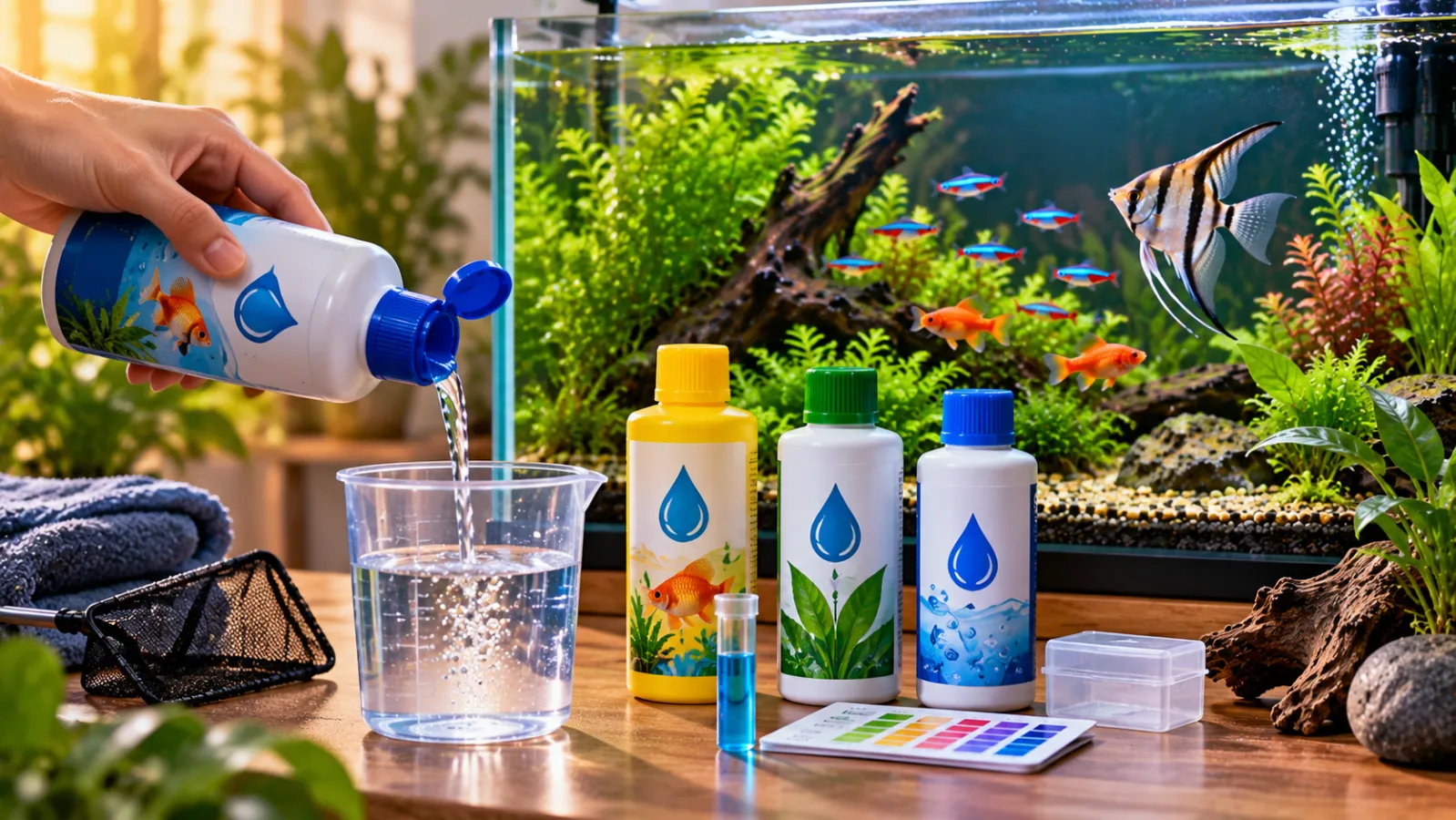
4. Water Testing Equipment
Water-testing equipment is often overlooked by beginners, but it's one of the most useful tools you can have.
Some important parameters to monitor can include:
- Ammonia
- Nitrite
- Nitrate
- pH
Depending on the aquarium, additional testing may be appropriate.
Water testing is particularly important when establishing a new aquarium because the nitrogen cycle needs time to develop.
The Ornamental Aquatic Trade Association's guidance on freshwater aquarium water quality explains why monitoring water quality is an important part of aquarium care.
For a beginner-friendly explanation, you can also read how to test aquarium water.
Why Water Testing Matters
You can't determine all aspects of water quality simply by looking at the aquarium.
The water may appear clear while containing unsuitable levels of certain compounds.
Testing can help you:
- Identify problems
- Monitor aquarium cycling
- Check changes in water quality
- Understand the effect of maintenance
- Make informed adjustments
A basic test kit can therefore be more useful than many decorative accessories.
5. Aquarium Lighting
Lighting is another important part of a beginner aquarium.
Its purpose depends on the type of setup.
For a fish-only aquarium, lighting can help establish a consistent day-night routine and make fish easier to observe.
For planted aquariums, lighting also provides the energy plants need for photosynthesis.
However, more light isn't automatically better.
Excessive lighting or unnecessarily long lighting periods can contribute to algae problems.
When choosing aquarium lighting, consider:
- Fish requirements
- Plant species
- Light intensity
- Aquarium depth
- Lighting duration
- Algae levels
If you're setting up a planted aquarium, you can learn more in our guide to the best aquarium lighting for fish and plants.
6. Water Conditioner
Tap water may contain substances used to make municipal water safe for people but unsuitable for aquarium fish.
A suitable aquarium water conditioner can be used according to the manufacturer's instructions to prepare tap water for aquarium use.
When selecting a water conditioner, read the product label carefully and follow its dosage instructions.
Don't assume that all water conditioners work in exactly the same way.
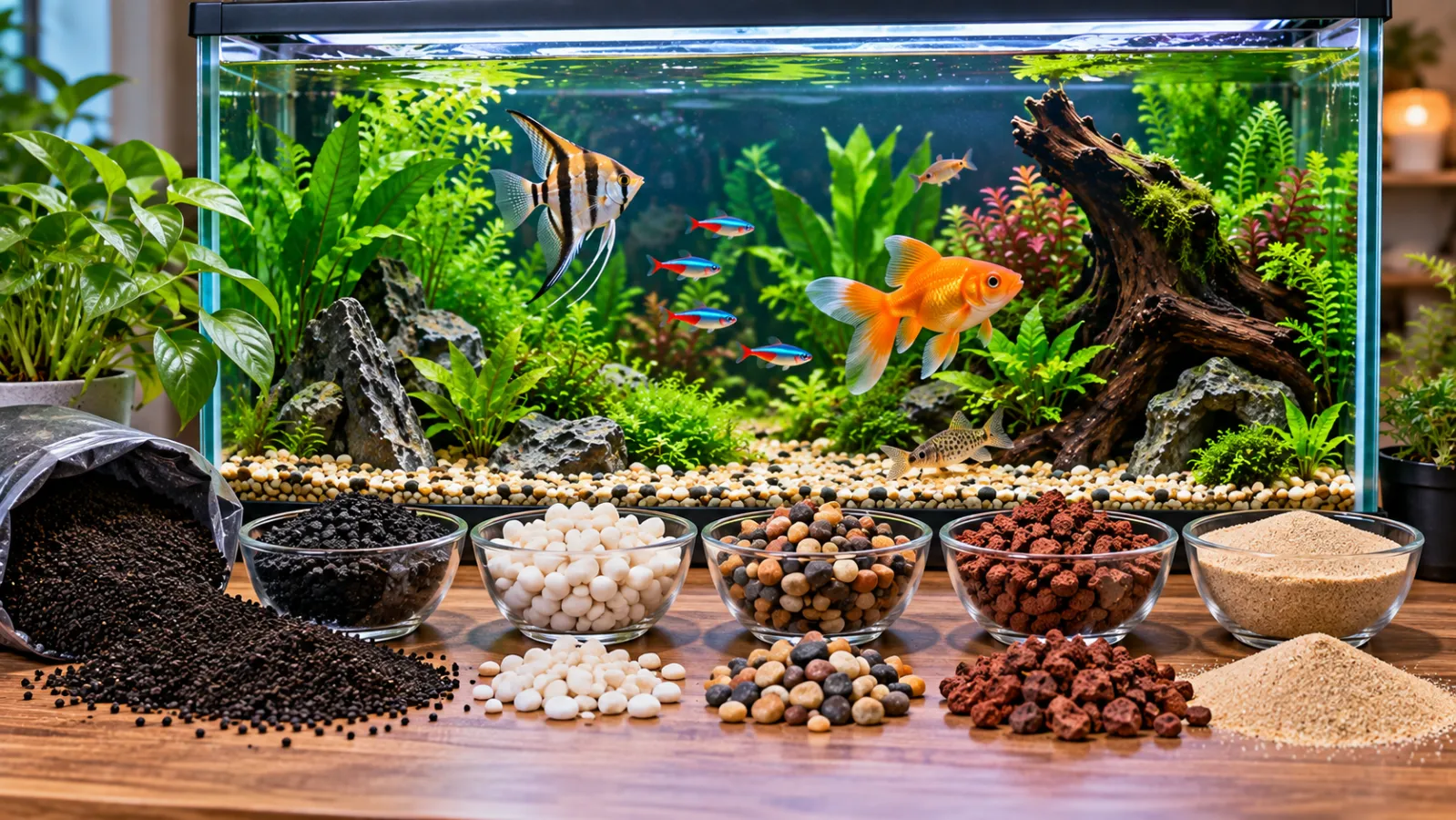
7. Aquarium Substrate
Substrate isn't required in exactly the same way for every aquarium, but it can serve several purposes.
It can:
- Improve aquarium appearance
- Provide a surface for microorganisms
- Support certain plants
- Create a more natural environment
- Allow bottom-dwelling fish to display natural behaviors
The right substrate depends on your aquarium inhabitants.
For planted freshwater aquariums, see Best Freshwater Aquarium Substrate for Fish and Plants.
8. Fish Net
A basic aquarium net is inexpensive but useful.
It can help with:
- Moving fish when necessary
- Removing floating debris
- Capturing unwanted material
- Maintenance tasks
Choose a net that is appropriately sized for your aquarium and fish.
Avoid using it unnecessarily, particularly when handling fish can cause stress.
9. Aquarium Cleaning Equipment
Basic maintenance equipment makes aquarium care considerably easier.
Useful items can include:
- Aquarium gravel vacuum
- Bucket reserved for aquarium use
- Algae scraper
- Cleaning sponge
- Water-change equipment
- Fish net
Having dedicated aquarium-maintenance equipment can help you keep your routine organized.
YourPetsWorld's guide on how to build an easy aquarium maintenance routine provides additional information about maintaining your aquarium.
10. Water-Change Equipment
Regular partial water changes are an important part of aquarium maintenance.
A basic setup can include:
- Aquarium-safe bucket
- Gravel vacuum
- Water conditioner
- Flexible tubing when required
- Clean towels for spills
When performing a water change, make sure replacement water is appropriately prepared before adding it to the aquarium.
You can follow our guide on how to perform a safe aquarium water change.
Essential vs Optional Aquarium Equipment
Not everything sold for aquariums is essential.
| EquipmentBeginner Priority | |
| Aquarium | Essential |
| Suitable stand | Essential |
| Filter | Essential |
| Heater | When required |
| Thermometer | Highly recommended |
| Water test kit | Essential for monitoring |
| Lighting | Essential |
| Water conditioner | Usually essential for treated tap water |
| Substrate | Depends on setup |
| Fish net | Useful |
| Gravel vacuum | Highly recommended |
| Algae scraper | Useful |
| Air pump | Depends on setup |
| Automatic feeder | Optional |
| CO₂ system | Mainly for specific planted setups |
| Decorative accessories | Optional |
The key is to purchase equipment according to your aquarium's actual needs.
What Aquarium Equipment Should a Beginner Buy First?
If you're working with a limited budget, prioritize the equipment that directly affects fish welfare and water quality.
Basic Priority List
1. Aquarium and suitable stand
Provides the physical environment and safe support.
2. Appropriate filter
Helps manage waste and supports biological filtration.
3. Heater if your fish require one
Helps maintain an appropriate temperature.
4. Thermometer
Allows you to verify actual water temperature.
5. Water-testing equipment
Helps monitor important water parameters.
6. Lighting
Provides appropriate illumination for fish and plants.
7. Water conditioner
Prepares tap water according to the product's instructions.
8. Maintenance equipment
Makes water changes and cleaning easier.
Common Beginner Mistakes When Buying Aquarium Equipment
Buying Too Much Equipment
More equipment doesn't automatically mean a healthier aquarium.
Start with the essentials.
Choosing Equipment Before Choosing Fish
Your fish determine many of your equipment requirements.
Research the species first.
Buying the Cheapest Filter
Price shouldn't be the only consideration. Reliability, capacity, maintenance and appropriate filtration matter too.
Ignoring Tank Size
Equipment should match the volume and requirements of the aquarium.
Forgetting Water Testing
Visual inspection isn't enough to determine all water-quality conditions.
Choosing the Strongest Heater
Higher wattage isn't automatically better.
Buying Extremely Powerful Lighting
Excessive light can contribute to algae problems and isn't necessary for every aquarium.
Neglecting Maintenance Equipment
A gravel vacuum, suitable bucket and basic cleaning tools can make routine aquarium care much easier.
A Simple Beginner Aquarium Equipment Checklist
Before adding fish, make sure you have the appropriate equipment for your setup:
Aquarium Setup
- Aquarium
- Suitable stand
- Lid or cover when appropriate
- Substrate
- Decorations
Filtration and Heating
- Filter
- Filter media
- Heater if required
- Thermometer
Water Management
- Water conditioner
- Water-testing kit
- Aquarium-safe bucket
- Gravel vacuum
Lighting
- Aquarium light
- Timer if needed
Maintenance
- Fish net
- Algae scraper
- Cleaning equipment
This checklist can help prevent the common problem of buying decorative accessories while forgetting essential maintenance equipment.
Frequently Asked Questions
What equipment does a beginner need for a fish tank?
The basic equipment includes an appropriate aquarium and stand, filter, heater when required, thermometer, water-testing equipment, lighting, water conditioner and basic maintenance tools.
Do all aquariums need a heater?
No. Whether you need a heater depends on the species you're keeping and the temperature of the surrounding environment.
Does every aquarium need a filter?
Most traditional home aquariums benefit from appropriate filtration. The filter should be selected according to aquarium size, stocking level and livestock requirements.
What water-testing equipment should beginners buy?
A basic test kit capable of checking important parameters such as ammonia, nitrite, nitrate and pH can be useful, particularly when establishing a new aquarium.
Do I need an expensive aquarium setup?
No. A healthy aquarium doesn't require every premium accessory available. Focus on appropriate equipment, good maintenance and the specific needs of your fish.
Do I need an air pump?
Not necessarily. An air pump can be useful in some aquarium setups, but whether one is needed depends on filtration, oxygenation, stocking and water movement.
Do I need live plants?
No. Live plants aren't mandatory for every aquarium. However, they can contribute to the appearance and ecosystem of suitable aquarium setups.
Final Thoughts
Setting up your first aquarium doesn't have to mean buying every product on the shelf.
Start with the essentials:
- Aquarium and suitable stand
- Appropriate filter
- Heater when required
- Thermometer
- Water-testing equipment
- Suitable lighting
- Water conditioner
- Basic maintenance equipment
Then choose additional equipment according to your fish, plants and aquarium design.
The most important principle is simple: choose equipment based on the needs of your aquarium, not the number of products available.
A well-planned setup with the right basic equipment can be easier to maintain, more cost-effective and more suitable for your fish than an aquarium filled with unnecessary accessories.
Sources & References
RSPCA. Fish and Aquariums.
Aqueon. Aquarium Filtration Basics.
Aqueon — Aquarium Filtration Basics
Aqueon. How to Choose the Best Filter for You and Your Tank.
Aqueon — How to Choose the Best Filter for You and Your Tank
Ornamental Aquatic Trade Association (OATA). How to Test Water Quality in Your Freshwater Tank / Aquarium.
OATA — How to Test Water Quality in Your Freshwater Tank / Aquarium
Ornamental Aquatic Trade Association (OATA). How to Set Up and Look After a Freshwater Tank / Aquarium.
OATA — How to Set Up and Look After a Freshwater Tank / Aquarium
PetMD. Why You Need an Aquarium Filter.
PetMD — Why You Need an Aquarium Filter
Created with AI • Independently Verified
This article was created with the assistance of artificial intelligence and cross-checked using multiple AI systems to help identify errors, inconsistencies, and missing information.
Important factual claims are additionally checked against reputable veterinary, scientific, animal-welfare, and other authoritative sources before publication.
Our standard: AI helps us research and explain. Reliable evidence determines what we publish.
Last reviewed: September 2026