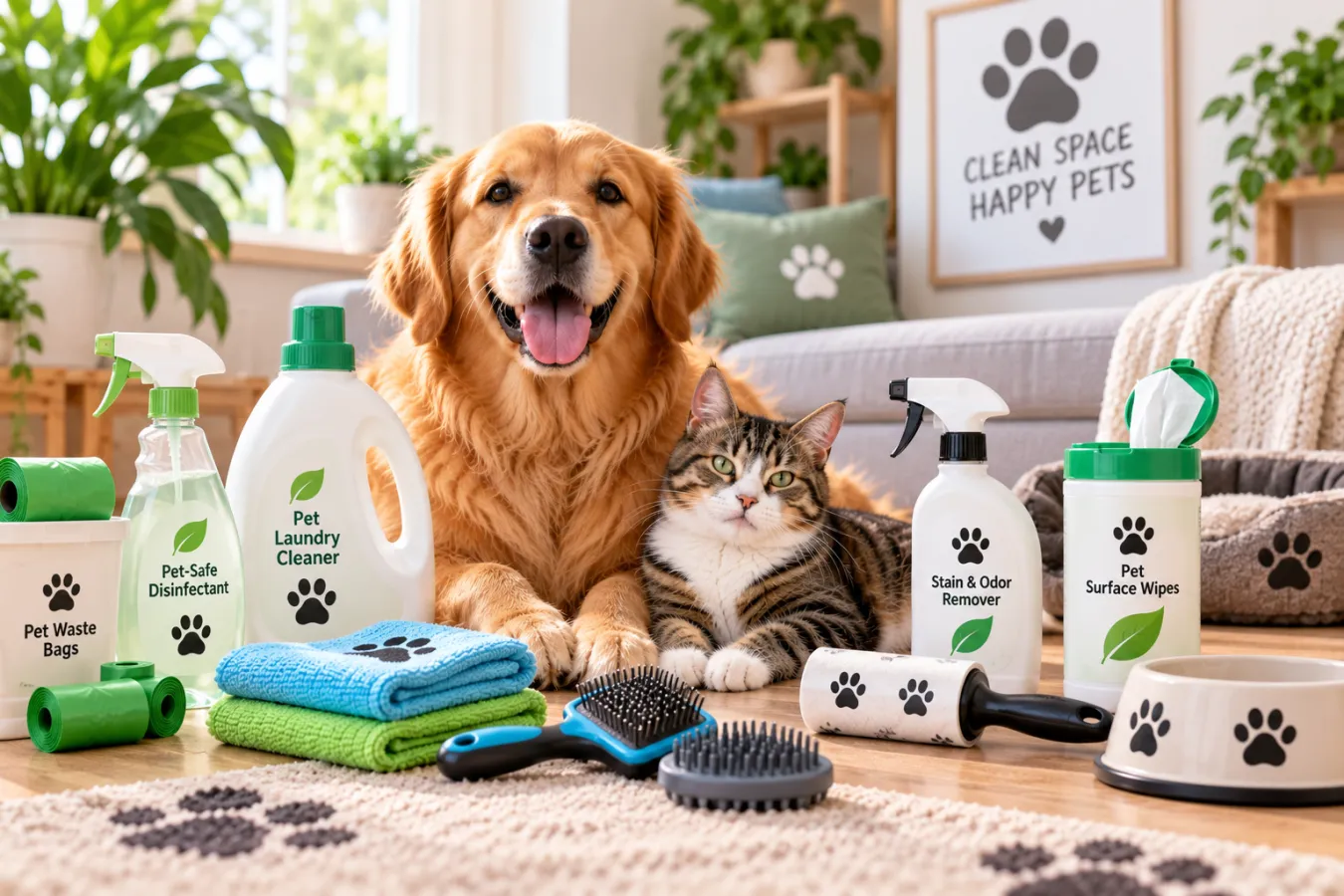
Keeping your home clean is an important part of caring for your pets. From floors and carpets to bedding, toys, feeding areas, and furniture, pets regularly come into contact with surfaces that you clean. But not every household cleaning product is appropriate for every pet-accessible area.
Choosing the right cleaning products means looking beyond simple claims such as "natural" or "pet-friendly." Pet owners should consider the product's intended use, label instructions, ingredients, drying requirements, and storage recommendations.
The good news is that you don't need to make cleaning complicated. With the right products and a few simple habits, you can maintain a clean home while taking sensible precautions to protect your pets.
Why Is Choosing Pet-Safe Cleaning Products Important?
Pets experience their environment differently from people. Dogs and cats may walk across freshly cleaned floors, lie on treated surfaces, lick their paws, or investigate objects with their mouths.
The ASPCA explains that many household cleaning products can be used safely around dogs and cats when they are used according to their labels, but certain products can cause problems if pets ingest them or encounter them incorrectly.
This is why the goal isn't necessarily to avoid every cleaning chemical. Instead, responsible pet owners should choose products appropriately, follow directions carefully, prevent unnecessary exposure, and store cleaning supplies securely.
If you're also choosing other products for your pet, you may find our guides on how to choose the right dog food for your pet, how to choose the perfect dog bed, and how to choose safe products for puppies useful.
What Should You Consider When Choosing Pet-Safe Cleaning Products?
1. Look for Pet-Safe Formulations
Start by checking the product label and manufacturer's information. Some products are specifically designed for households with pets, while others may provide clear instructions about animal access after use.
However, don't assume that a product is safe simply because it is described as "natural," "organic," "plant-based," or "eco-friendly." These terms alone don't tell you whether a product is appropriate for a particular animal or surface.
Instead, consider the complete product information, including its intended use and safety instructions.
2. Consider Where You Will Use the Product
The best cleaning product for your bathroom floor may not be the best option for a pet toy, food bowl, bedding, or crate.
Before using a product, consider the surface you're cleaning:
- Hard floors
- Carpets and rugs
- Upholstery
- Pet bedding
- Crates and carriers
- Pet toys
- Food and water areas
- Frequently touched household surfaces
Always check whether the product is intended for that specific surface. The CDC also recommends checking disinfectant labels to confirm that a product is appropriate for the type of surface being treated.
For more guidance on selecting suitable pet products, you can also read our articles about choosing durable chew toys for dogs and choosing the right dog collar and harness.
3. Read the Label Before Using the Product
Reading the label is one of the most important steps when choosing and using cleaning products.
The U.S. Environmental Protection Agency recommends reading product labels carefully because they provide information about safe use, storage, precautions, and what to do in an emergency.
Look for instructions about:
- How much product to use
- Whether dilution is required
- How long the product should remain on a surface
- Whether rinsing is necessary
- Ventilation requirements
- How long pets should remain away from the area
- Safe storage
- First-aid instructions
Don't use more product than recommended. More cleaner does not necessarily mean better cleaning.
4. Keep Pets Away While Cleaning
Even when a product is suitable for a pet-owning household, it's sensible to keep animals away while you are cleaning.
Wet cleaning solutions can be transferred to paws, fur, or other body parts. Pets may then lick themselves and accidentally ingest residue.
Keep your pet in another room or otherwise prevent access to the area until cleaning is complete and the product's instructions say the area can be used again.
The EPA specifically advises keeping pets away from treated areas when directed by the product label.
5. Allow Surfaces to Dry Properly
Drying time is an important consideration that pet owners sometimes overlook.
If a product's instructions require a surface to dry before people or animals can access it, follow those instructions carefully. Don't allow your pet to walk across wet floors simply because the surface appears almost dry.
For certain products, additional rinsing or airing out may also be required. Follow the manufacturer's directions rather than relying on assumptions.
The ASPCA notes, for example, that appropriately diluted bleach can be used for certain pet items when it is thoroughly rinsed and the bleach odor has dissipated before the pet is allowed around the items.
6. Avoid Mixing Cleaning Products
Never mix cleaning products unless the manufacturer specifically instructs you to do so.
Different chemicals can react with each other and potentially create hazardous fumes or change the properties of the products.
The CDC advises against mixing cleaning or disinfecting products because doing so can be hazardous.
A simple rule is best:
Use one cleaning product according to its instructions rather than experimenting with combinations.
7. Store Cleaning Products Where Pets Cannot Reach Them
Choosing a suitable cleaner is only part of keeping your home pet-safe. Proper storage is equally important.
Keep cleaning products:
- In securely closed containers
- Inside cabinets or other inaccessible storage
- Away from pet food and water bowls
- Away from areas where pets can knock bottles over
- In their original containers whenever possible
The EPA recommends keeping household cleaners and other potentially hazardous products out of pets' reach and retaining the original containers and labels.
Never transfer cleaning chemicals into food or beverage containers. Doing so can create confusion and remove important safety information from the original packaging.
Which Cleaning Products Require Extra Care?
Some household products deserve particular attention because accidental exposure can cause problems.
Bleach
Bleach should always be diluted and used according to the product's instructions. The ASPCA notes that diluted bleach can be used for certain pet items when properly rinsed and allowed to air out before pets have access.
Laundry Detergents and Pods
Laundry products should be kept securely away from pets. The ASPCA warns that liquid laundry detergent and detergent pods can cause irritation and gastrointestinal problems if ingested, with serious symptoms possible in some cases.
Fabric Softeners and Dryer Sheets
These products can contain ingredients that may be harmful if pets chew or ingest them. Store them securely and don't leave used dryer sheets where pets can access them.
Disinfectants
Disinfectants should be used exactly as directed. The CDC recommends cleaning surfaces before disinfecting them and following the product label for application and contact time.
Do You Need to Disinfect Everything?
Not necessarily.
Cleaning and disinfecting are different processes. According to the CDC, cleaning with soap and water can remove many germs from surfaces, while disinfection is primarily useful in situations where reducing remaining germs is necessary, such as when someone is sick.
This means pet owners don't necessarily need to use strong disinfectants for every routine cleaning task.
Choose the appropriate cleaning method for the situation and always follow the product instructions.
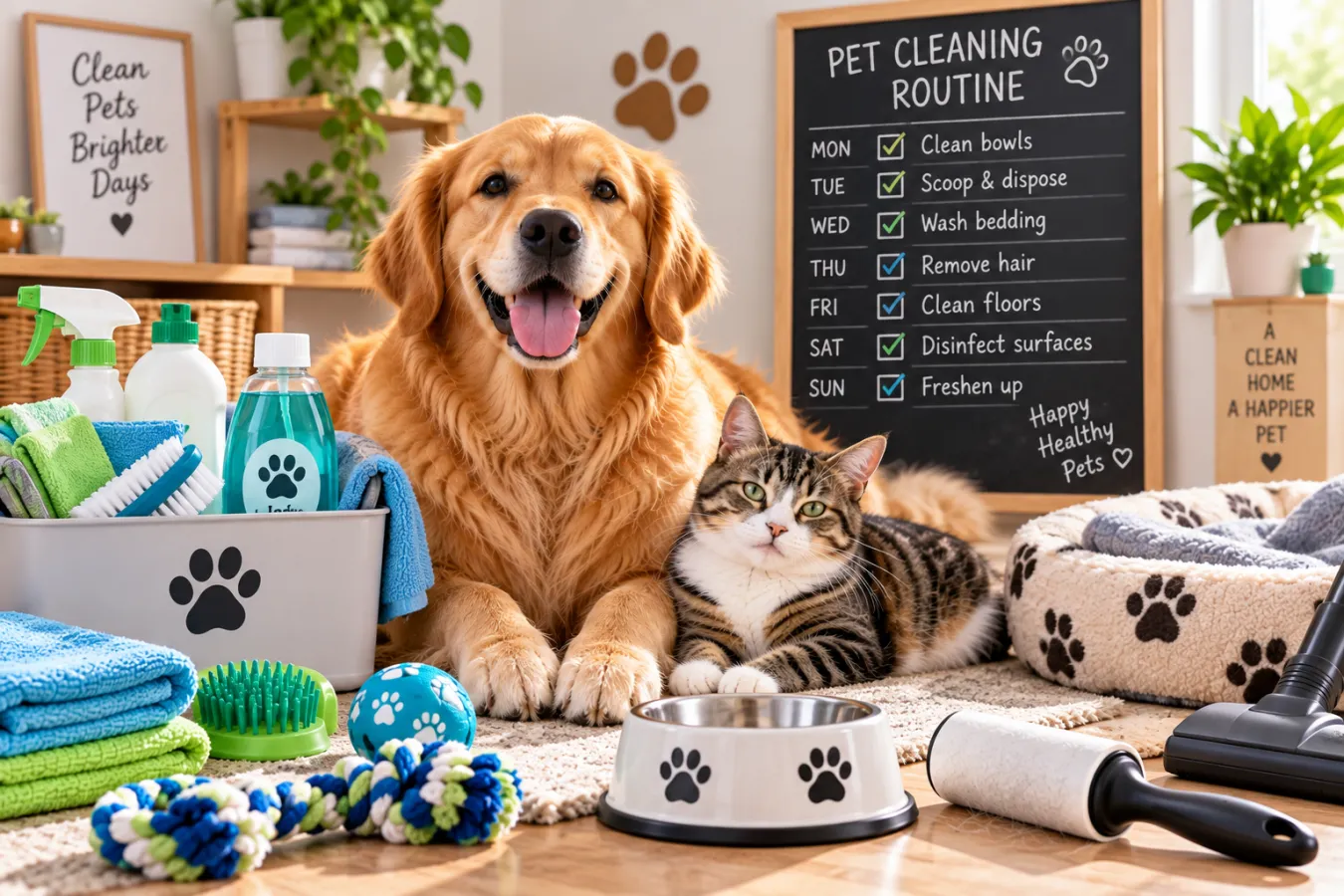
A Simple Pet-Safe Cleaning Routine
You can make household cleaning easier by following a consistent routine.
Step 1: Move Your Pet Away
Keep your pet away from the area before you begin cleaning.
Step 2: Read the Product Label
Check the directions, precautions, dilution requirements, and drying instructions.
Step 3: Use the Correct Amount
Use only the amount recommended by the manufacturer.
Step 4: Ventilate When Required
Open windows or increase airflow when the product label recommends ventilation.
Step 5: Rinse or Wipe as Directed
Some surfaces or products may require rinsing after use. Follow the instructions carefully.
Step 6: Allow the Area to Dry
Keep pets away until the surface is ready for normal use.
Step 7: Store the Product
Close the container securely and return it to a location your pet cannot reach.
Pet-Safe Cleaning Checklist
Before using a cleaning product, ask yourself:
Is this product appropriate for the surface?
Check whether it is designed for the material you're cleaning.
Have I read the entire label?
Look for warnings, dilution instructions, ventilation requirements, and pet-access restrictions.
Does my pet need to leave the area?
If the label recommends restricting access, follow the instructions.
Does the surface need to be rinsed?
Check the manufacturer's directions, especially for surfaces your pet may lick.
Have I allowed enough drying time?
Don't allow your pet back too soon.
Is the product stored safely?
Keep bottles and containers closed and inaccessible.
Am I mixing products?
Don't mix cleaning chemicals unless the manufacturer specifically says it is safe.
What Should You Do If Your Pet Is Exposed to a Cleaning Product?
If you believe your pet has ingested a cleaning product or has had a potentially harmful exposure, remove the animal from the source and prevent further contact.
Don't rely on guesswork when dealing with a possible poisoning. Contact your veterinarian or an appropriate animal poison-control service and keep the product container or label available. The ASPCA recommends contacting veterinary professionals or poison control promptly when a pet may have been exposed to a toxic substance.
If your pet is showing severe symptoms such as difficulty breathing, seizures, loss of consciousness, or significant distress, seek emergency veterinary care immediately.
Frequently Asked Questions
What is the safest cleaning product to use around pets?
There is no single cleaning product that is best for every pet and every surface. Choose a product appropriate for the specific cleaning task, read its label carefully, and follow the manufacturer's instructions for use, drying, ventilation, and pet access.
Are natural cleaning products automatically safe for pets?
No. A product being labeled natural or plant-based does not automatically mean it is safe for every pet. Always check the ingredients and directions and consider how your pet could come into contact with the product.
Should I keep my dog or cat away while cleaning?
Yes, especially when the product label instructs you to do so or while surfaces are still wet. Allow the product to be used and dried according to the manufacturer's instructions before giving your pet access.
Can I use bleach around pets?
Bleach should be used carefully and according to its label. The ASPCA states that properly diluted bleach can be used for certain pet items when thoroughly rinsed and allowed to air out before the pet is allowed near them.
Can I use disinfectant on my pet's toys?
Only use a disinfectant on a pet toy if the product is appropriate for that surface and its instructions allow that use. Follow any required rinsing and drying instructions before giving the toy back to your pet.
How should I store cleaning products around pets?
Keep cleaning products tightly closed and stored somewhere pets cannot access them. Keeping products in their original containers also ensures that important safety and emergency information remains available.
Final Thoughts
Choosing the best pet-safe cleaning products is about making informed decisions rather than simply choosing a product because its packaging says "natural" or "pet-friendly."
Check the intended use, read the label, follow dilution and drying instructions, keep pets away from wet or treated areas when required, never mix cleaning chemicals, and store products securely.
These simple habits can help you maintain a clean home while reducing unnecessary risks for your pets.
And when you're choosing other products for your pet, don't forget to explore our guides on choosing the right dog leash, choosing durable chew toys, and choosing safe products for puppies.
Sources & References
- ASPCA – Poisonous Household Products
- U.S. EPA – Read the Label First: Protect Your Pets
- CDC – Cleaning and Disinfecting
- CDC – Cleaning and Disinfecting with Bleach
- ASPCA – What to Do if Your Pet Is Poisoned
Disclaimer
This article is intended for general educational purposes and does not replace professional veterinary advice. If you believe your pet has been exposed to a potentially harmful cleaning product, contact your veterinarian or an appropriate animal poison-control service.
Created with AI • Independently Verified