Choosing the right products for your cat can make everyday pet care easier, safer, and more enjoyable. But with so many beds, toys, feeding accessories, litter boxes, scratching posts, grooming tools, and other products available, it can be difficult to know what your cat actually needs.
The best cat products are not necessarily the most expensive ones. What matters more is whether a product is safe, practical, appropriate for your cat's age and lifestyle, and something your cat will actually use.
A kitten may need different supplies from a senior cat, while an indoor cat living in a small apartment may benefit from different enrichment options than a cat with plenty of space to explore. Understanding those differences can help you spend money more wisely and create a home that supports your cat's physical comfort, natural behaviors, and daily routine.
What Does a Cat Actually Need?
Cats need more than food and a place to sleep. Their environment should allow them to eat, drink, rest, use the litter box, scratch, play, explore, hide, and move around comfortably.
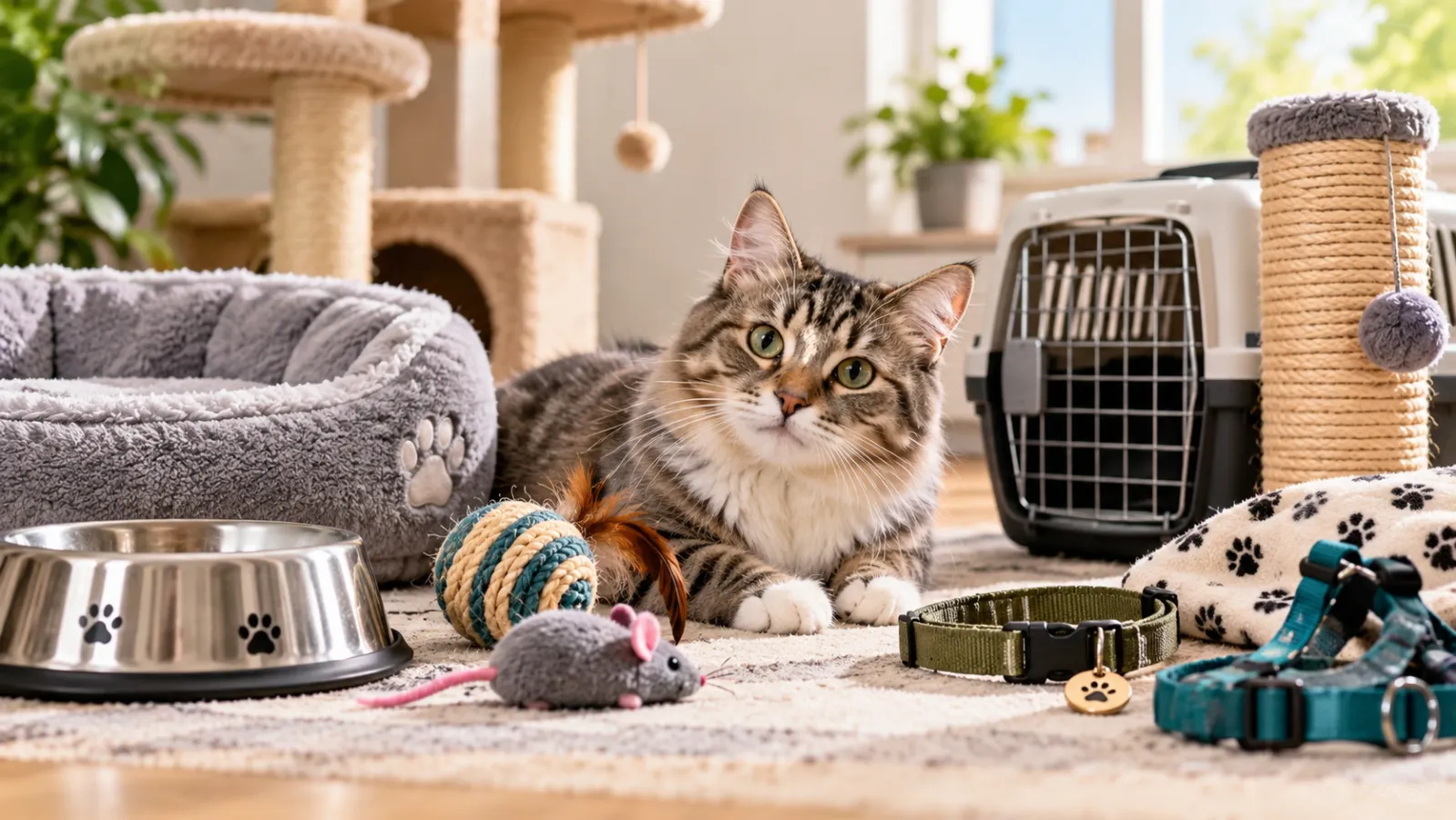
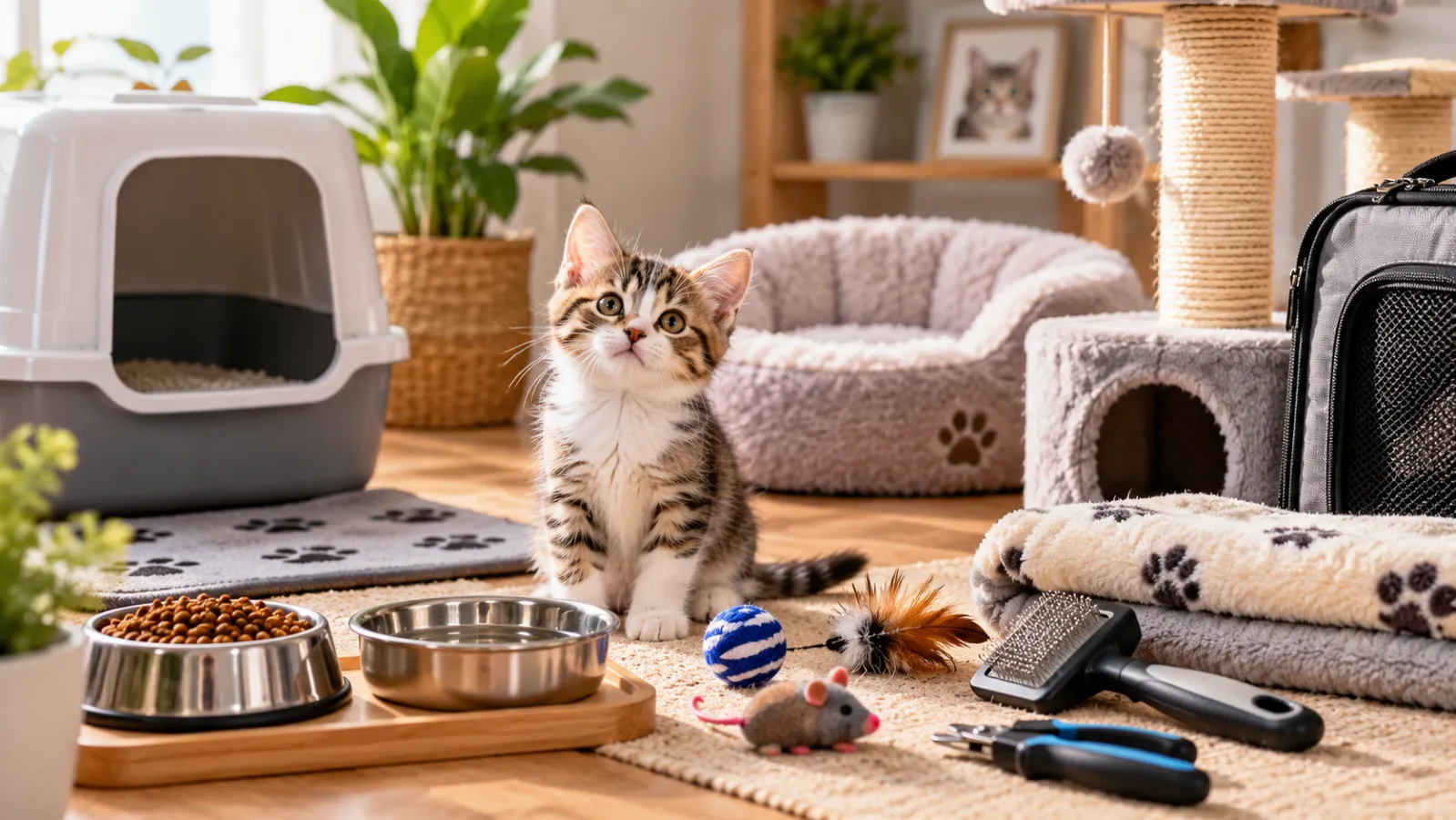
That does not mean you need to buy every product marketed to cat owners. A better approach is to start with the essentials and then add items based on your cat's individual behavior and needs.
For example, a scratching post may be far more useful than an expensive decorative accessory, while an interactive toy may provide more value than a large collection of toys your cat rarely uses.
When preparing your home for a new cat, Essential Cat Supplies Every New Owner Needs can also help you work through the basics before deciding what additional products to purchase.
Start With Nutritious Cat Food
Food is one of the most important purchases you will make for your cat. Look for a product that provides complete and balanced nutrition for the appropriate life stage rather than choosing food solely because its packaging looks appealing.
Kittens, adult cats, and older cats can have different nutritional requirements, and some cats may need a diet tailored to a particular health condition.
You should also consider your cat's individual preferences and calorie needs. Wet food, dry food, or a combination can all fit into an appropriate feeding plan depending on the cat and the overall diet.
For a more detailed look at choosing food, read How to Choose the Right Cat Food: A Practical Guide for Every Life Stage.
Provide Clean, Accessible Water
Fresh water should always be available.
A regular bowl may be perfectly suitable for some cats, while others may prefer drinking from a fountain. The most important thing is that the water is clean, accessible, and refreshed regularly.
If you decide to use a water fountain, choose one that is easy to disassemble and clean. A fountain that is difficult to maintain may become less useful over time.
You do not necessarily need to replace a bowl with a fountain. Instead, observe what your cat prefers and make sure there is always a reliable source of fresh water.
Choose an Appropriate Litter Box
A litter box is one of the most important items in any cat household.
The box should be large enough for your cat to enter, turn around, and use comfortably. Many cats also prefer boxes that are clean and located in quiet, accessible areas.
In multi-cat households, providing multiple litter boxes can help give cats more choice and reduce competition. A commonly recommended starting point is one litter box per cat plus one extra, although household layout and individual cat behavior should also be considered.
Clean the boxes regularly and pay attention to changes in your cat's litter-box habits. A sudden change in urination or defecation can sometimes indicate a health problem and should not simply be blamed on the litter box.
Add a Scratching Post
Scratching is a normal feline behavior. Cats scratch for several reasons, including stretching, maintaining their claws, marking territory, and engaging with their environment.
Providing an appropriate scratching surface gives your cat somewhere safe to perform this natural behavior.
Look for a scratching post that is:
- Stable enough not to tip over
- Tall enough for your cat to stretch
- Made from a material your cat enjoys scratching
- Positioned where your cat is likely to use it
If your cat already scratches the sofa or another piece of furniture, placing a suitable scratching post nearby may make the alternative more attractive.
For more ideas about preparing an appropriate environment, How to Prepare Your Home Before Bringing a Cat Home covers other practical considerations for creating a cat-friendly space.
Give Your Cat a Comfortable Place to Sleep
Cats spend a large part of their day resting, but they do not all sleep in the same way.
Some cats prefer enclosed beds, while others want an open cushion or a flat mat. Some like elevated locations, while others repeatedly return to the sofa or a quiet corner.
That means there is no single “best” cat bed for every cat.
When choosing one, consider your cat's sleeping habits, body size, age, preferred temperature, and mobility. A senior cat may benefit from easy access and supportive cushioning, while a younger cat may prefer an elevated or enclosed option.
You can read How to Choose the Perfect Cat Bed for Your Cat for a more detailed guide to bed size, shape, materials, safety, and placement.
Use Toys to Encourage Play and Enrichment
Toys can help cats express natural behaviors such as chasing, pouncing, batting, stalking, and exploring.
Useful options include:
- Feather wands
- Ball toys
- Puzzle feeders
- Catnip toys
- Interactive toys
You do not need dozens of toys. A small selection that your cat actually enjoys can be more useful than a large collection.
Rotate toys periodically to keep familiar items interesting, and supervise toys that contain strings, feathers, small detachable pieces, or other components that could become unsafe if damaged or swallowed.
Interactive play can be particularly useful for indoor cats because it gives them additional opportunities for movement and mental engagement.
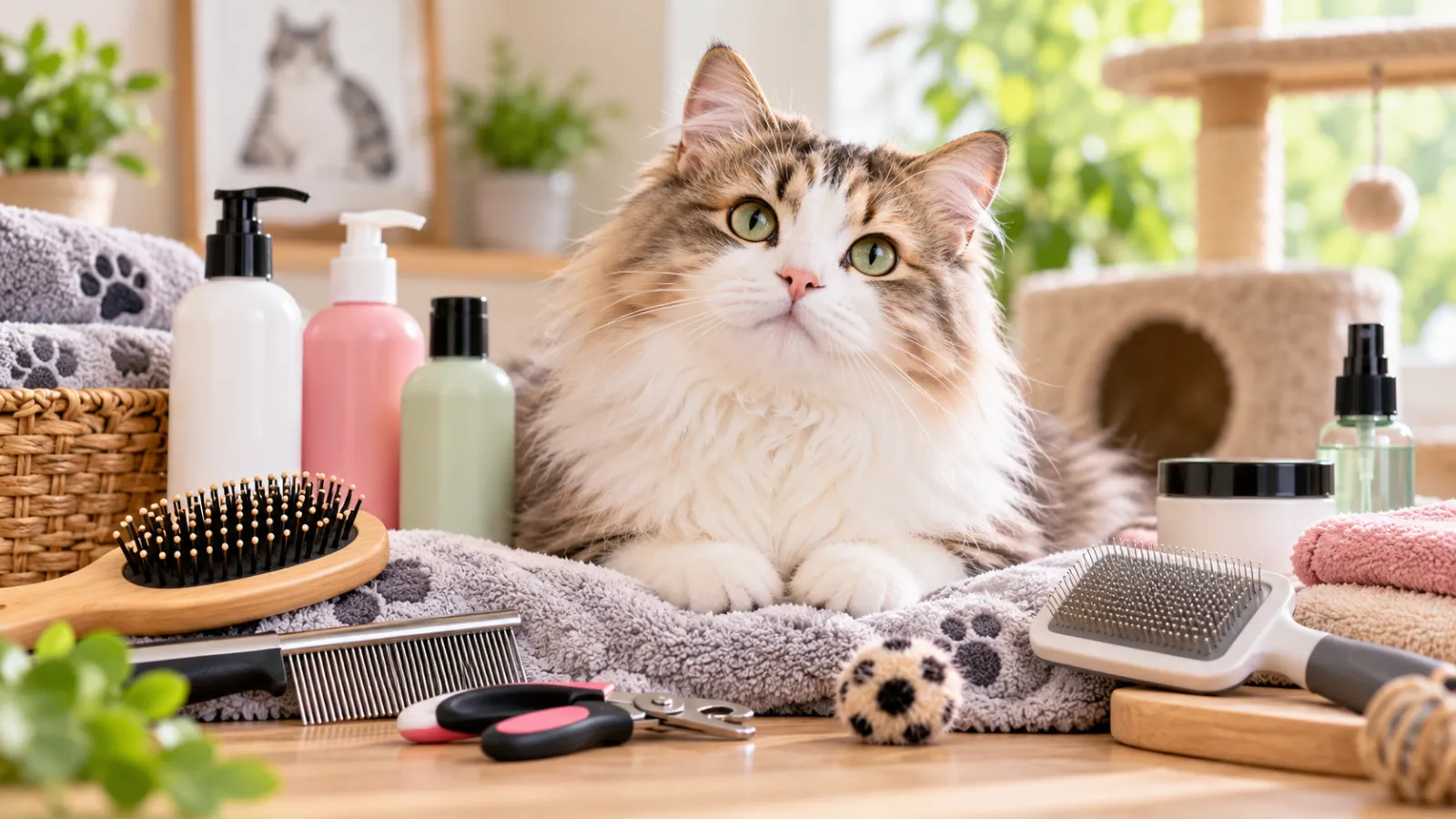
Choose Grooming Tools for Your Cat's Coat
Grooming requirements vary significantly between cats.
Short-haired cats may need relatively simple brushing, while long-haired cats often require more frequent grooming to help manage loose hair and prevent tangles or mats.
Useful grooming supplies may include:
- Brushes
- Combs
- Deshedding tools
- Grooming gloves
- Nail clippers
Choose tools according to your cat's coat rather than buying every grooming product available.
Introduce grooming gradually and keep sessions calm. If your cat becomes distressed, stop and try again later. Persistent skin problems, excessive shedding, painful mats, or sudden changes in coat condition should be discussed with a veterinarian rather than treated solely as a grooming issue.
Keep a Secure Cat Carrier Ready
A carrier is not only for vacations. It is an important part of responsible cat ownership because your cat may need to travel for veterinary appointments, emergencies, or other unavoidable journeys.
Look for a carrier that offers:
- Good ventilation
- Secure construction
- Enough space for your cat to sit and turn comfortably
- Easy cleaning
- A secure door or closure
It is also worth helping your cat become familiar with the carrier before it is urgently needed. Leaving it open in a familiar area and allowing your cat to investigate it at their own pace can make the carrier less unfamiliar.
Add Vertical Space With a Cat Tree
Cats often benefit from having opportunities to climb, perch, observe, and rest at different heights.
A cat tree or climbing tower can provide several functions at once, including:
- Vertical space
- Exercise
- Resting areas
- Scratching surfaces
- Opportunities to observe the environment
This can be especially useful in smaller homes where floor space is limited.
Choose a structure that is stable and appropriate for your cat's size. Taller structures should be securely positioned so they are less likely to tip or wobble.
Use Practical Feeding Bowls
Food and water bowls should be easy to access and easy to clean.
Stainless steel and ceramic are common choices, although the most important considerations are cleanliness, stability, and suitability for your cat.
A bowl with a non-slip base can reduce movement during meals. Some cats also appear to prefer wider or shallower bowls, so your cat's individual comfort is worth observing rather than assuming one design is universally better.
Clean food and water bowls regularly and replace them when they become damaged.
Choose Products Based on Your Cat's Lifestyle
The “best” products can look very different from one household to another.
For an Indoor Apartment Cat
An indoor cat in a smaller home may benefit from a combination of interactive toys, a stable scratching post, vertical space, and several comfortable resting areas.
The goal is not to fill the home with equipment. It is to use the available space effectively so your cat has opportunities to move, play, scratch, climb, hide, and rest.
For a Senior Cat
Older cats may benefit from products that make everyday movement easier.
A low-entry litter box, easily accessible bed, gentle grooming tools, and comfortable resting surfaces can be useful where mobility has become more limited.
If your senior cat suddenly struggles to jump, climb, move, or reach the litter box, speak with your veterinarian rather than assuming that the change is simply a normal part of aging.
For a Multi-Cat Household
Several cats sharing one home may benefit from multiple resources.
Consider providing multiple litter boxes, scratching surfaces, resting places, water sources, and feeding areas where practical.
Giving cats more than one option can reduce competition and allow individual cats to choose where they feel most comfortable.
How to Choose Cat Products More Wisely
Before purchasing a product, ask four simple questions:
Is It Safe?
Check for loose threads, small detachable pieces, exposed wires, unstable structures, sharp edges, or materials that could be chewed apart.
Will My Cat Actually Use It?
A product can be excellent quality and still be ignored. Think about your cat's existing habits before buying.
Is It Easy to Maintain?
Products that are difficult to clean often become inconvenient over time. Look for washable materials and designs that are easy to inspect.
Does It Suit My Cat's Needs?
Age, size, mobility, coat type, activity level, and household environment should all influence your decision.
A Simple CARE Framework for Choosing Cat Products
A useful way to evaluate a product is the CARE framework:
C — Comfort
Does the product provide a comfortable and secure place for your cat to rest or interact with the environment?
A — Activity
Does it encourage appropriate movement, play, climbing, scratching, or exploration?
R — Routine
Can you easily incorporate it into your cat's normal daily care?
E — Enrichment
Does it give your cat opportunities to explore, interact, play, forage, or express natural behaviors?
The framework is simple, but it can prevent impulse purchases. Instead of asking whether a product looks impressive, ask whether it actually improves some part of your cat's everyday life.
Common Cat Product Buying Mistakes
Buying Only for Appearance
A product may match your furniture perfectly but have little appeal to your cat.
Choosing Price Over Suitability
An inexpensive item can be perfectly useful, while an expensive product may be completely ignored. Focus on safety, practicality, and your cat's individual needs.
Buying Too Much at Once
Start with essential supplies and see what your cat actually uses. You can always add enrichment items later.
Ignoring Your Cat's Preferences
One cat may love a cave bed while another prefers a flat mat. One may enjoy a particular scratching material while another ignores it.
Keeping Damaged Products
Inspect toys, beds, scratching structures, carriers, and other equipment regularly. Replace products when they become damaged or unsafe.
Forgetting About Enrichment
Food and litter are necessities, but cats also need appropriate opportunities for play, exploration, scratching, climbing, and rest.
Create a Cat-Friendly Home With the Right Essentials
The best approach is not to buy the largest collection of cat products possible. Start with the basics your cat needs every day:
| Essential Main Purpose | |
| Complete cat food | Supports daily nutrition |
| Water bowl or fountain | Provides access to fresh water |
| Litter box | Provides an appropriate toileting area |
| Scratching post | Supports natural scratching behavior |
| Comfortable bed | Provides a dedicated resting option |
| Interactive toys | Supports play and enrichment |
| Grooming tools | Helps meet coat and grooming needs |
| Cat carrier | Supports safe transport |
| Cat tree or climbing area | Provides vertical space and activity |
| Food and water bowls | Supports practical feeding and hydration |
From there, watch your cat. Their behavior will tell you which products are valuable and which ones are unnecessary.
Frequently Asked Questions
What are the most important cat products for a new owner?
Start with complete and balanced cat food, fresh water, an appropriate litter box, a scratching surface, comfortable resting space, toys, grooming supplies suited to the cat, and a secure carrier.
Does every cat need a water fountain?
No. A fountain can be useful for cats that prefer moving water, but a clean and accessible bowl can also work well.
How many litter boxes should I have?
A commonly recommended starting point is one litter box per cat plus one additional box. Individual households may need to adjust this based on available space and the cats' preferences.
Why does my cat need a scratching post?
Scratching is a normal feline behavior that can support stretching, claw maintenance, environmental interaction, and territorial marking.
How many toys does a cat need?
There is no fixed number. A small selection of safe toys that your cat actually enjoys is usually more useful than buying a large collection.
Is a cat tree necessary?
Not every cat needs a commercial cat tree, but many cats can benefit from safe opportunities to climb, perch, observe, and rest above floor level.
How often should cat products be replaced?
There is no universal replacement schedule. Inspect products regularly and replace them when they become damaged, unstable, excessively worn, or difficult to clean.
Should I buy products specifically for my cat's age?
Age can influence your choices. Kittens may need products designed for their size and development, while senior cats may benefit from easier access and additional comfort.
Final Thoughts
The best cat products are not the products with the biggest advertising claims or the highest price tags. They are the products that safely support the way your individual cat eats, drinks, sleeps, scratches, plays, explores, travels, and relaxes.
Start with the essentials and observe what your cat actually enjoys. Choose products that are safe, practical, easy to maintain, and appropriate for your cat's age and lifestyle.
You do not need to turn your home into a pet store. A few thoughtfully chosen essentials can provide everything your cat needs for a comfortable, stimulating, and well-managed environment.
Most importantly, remember that every cat is different. The bed your friend recommends, the toy your neighbor's cat loves, or the product that looks perfect online may not be right for your companion. Let your cat's behavior guide your choices.
Sources & References
This article is intended as general pet-care information. Recommendations should be considered alongside the individual needs of each cat and, where appropriate, advice from a qualified veterinarian.
Relevant guidance for cat welfare and environmental needs includes resources from recognized veterinary and animal-welfare organizations, including the American Association of Feline Practitioners (AAFP), International Cat Care, and the RSPCA.
Created with AI • Independently Verified
This article was created with the assistance of artificial intelligence and cross-checked using multiple AI systems to help identify errors, inconsistencies, and missing information.
Important factual claims are additionally checked against reputable veterinary, scientific, animal-welfare, and other authoritative sources before publication.
Our standard: AI helps us research and explain. Reliable evidence determines what we publish.
Last reviewed: September 2026